




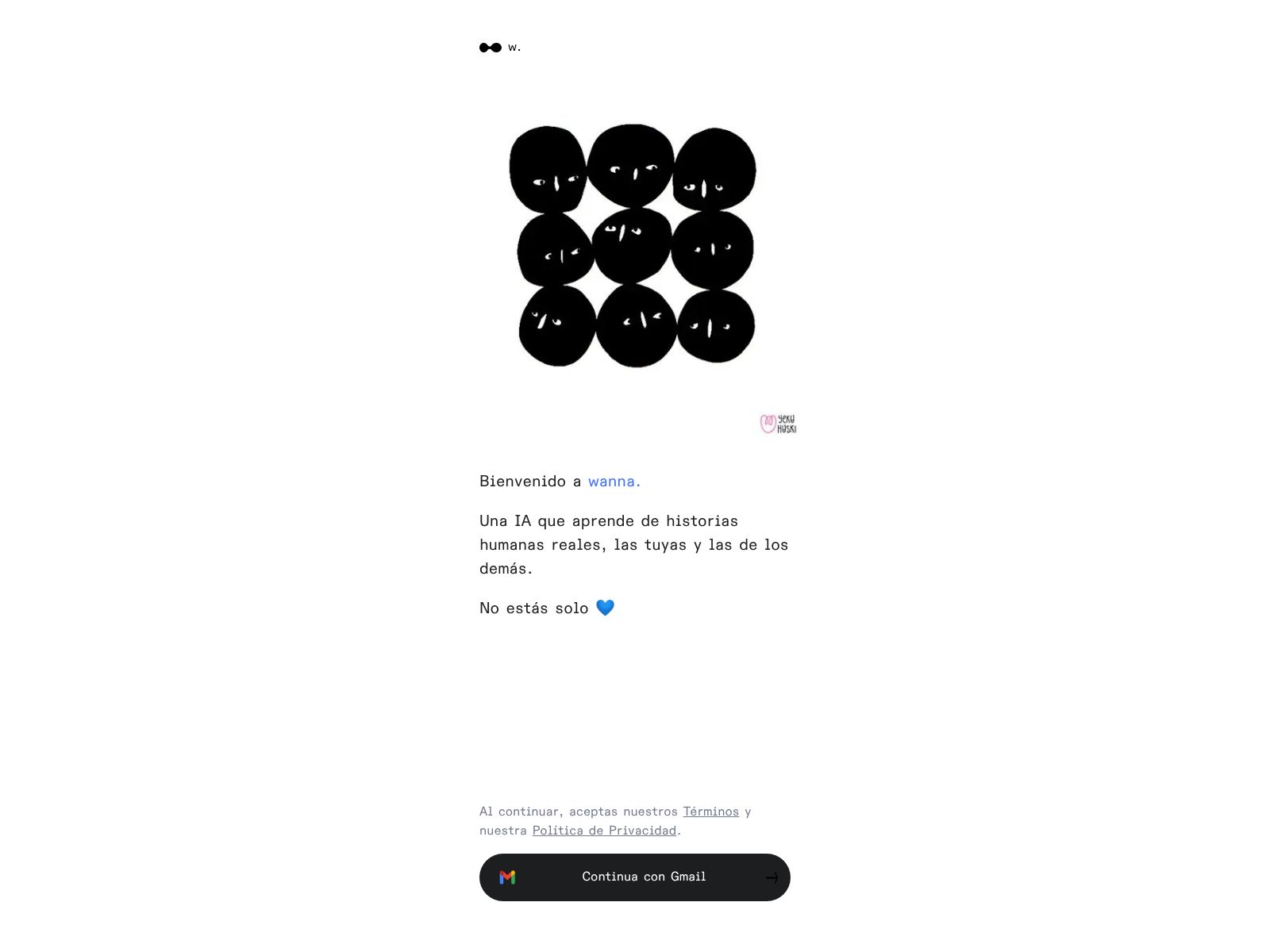
You don’t have to be a professional writer to tell a powerful story. Most of the moments that shape you are small, honest, and deeply human—moving to a new city, caring for a parent, losing a job, falling in love, starting over. Wanna by Omama steps into that space with a clear goal: make it easier for people to share real experiences and connect through them. If you’ve been looking for a place online that prioritizes thoughtful conversation over clicks, and authentic stories over hot takes, you’ll want to pay attention to this platform.
At its heart, Wanna by Omama provides tools that help you express your personal stories and discover others who have lived something similar. Instead of throwing you into a noisy feed, it uses gentle, AI-guided prompts and conversational scaffolding to help you actually talk—to go beyond the headline version of your life and get to the parts that matter. It’s a digital space designed for listening as much as sharing.
In this review and overview, I’ll walk you through what Wanna by Omama does, the key features to know, how it might fit your needs (personally or for your team), what to consider about pricing, and the top alternatives if you’re comparing options. By the end, you’ll have a clear sense of whether this is the right place for your stories—and the connections that can grow from them.
Wanna by Omama is a platform where you share personal stories and engage in guided, human-centered conversations. It uses AI to nudge, prompt, and structure narrative exchanges, helping you connect with others around specific life moments and experiences—without jargon, judgment, or a race for virality. Think of it as a calm space to tell your story and hear others, with technology quietly supporting more meaningful dialogue.
Wanna by Omama is built around a simple idea: make it easy and inviting for anyone to tell a story and find connection. Here are the core pillars that bring that idea to life.
Facing a blank page is tough. Wanna by Omama’s use of AI focuses on removing that friction. Instead of staring at an empty box, you’re offered prompts and gentle questions that spark memory and reflection. The guidance feels more like a thoughtful friend than a script—nudges like “What surprised you most?” or “Who showed up for you?” can help you reach a deeper layer of your experience without getting lost or overwhelmed.
Wanna by Omama orients conversation around the life events and seasons we all go through—moving, caregiving, recovery, starting a business, grief, celebration, transition. By organizing stories through these human touchpoints, the platform makes it easier to find people who “get it.” You’re not shouting into the void; you’re entering rooms where the topic is already aligned with what you want to explore.
Good conversations need structure—especially online. Wanna by Omama uses AI to keep discussions focused and healthy. Instead of endless back-and-forth that spirals, prompts and pacing cues help participants go deeper at a human speed. It’s not about debating; it’s about adding your layer to a shared story. This is particularly valuable for sensitive topics where care, consent, and tone matter.
Finding meaningful content online can feel like panning for gold. Wanna by Omama’s discovery is designed to surface stories that resonate, not just trend. You can explore by themes, moments, or threads that other people find helpful, with curation that respects the human behind each post. The goal is simple: help you find what you need when you need it—whether that’s inspiration, solidarity, or just a reminder you’re not alone.
Stories are personal. You should decide how, where, and with whom they’re shared. While every platform handles privacy in its own way, the spirit of Wanna by Omama emphasizes consent and connection—meaning you can expect a model that respects boundaries. If privacy is a priority for you, look for settings that let you choose visibility for each story, limit who can respond, and retract or edit posts over time.
Beyond sharing, one of the most valuable parts of storytelling is seeing your own growth. AI can help you spot patterns in your experiences—recurring themes, values, or turning points. Whether you’re processing change, documenting family history, or building resilience, these reflective layers can make your story feel both personal and portable: something you can carry forward into decisions, relationships, and work.
Wanna by Omama is for people—but “people” often gather in communities, classrooms, teams, and circles. If you’re exploring this for a group context, look for ways the platform can host contained conversations (for example, a cohort or support circle) while still allowing for broader discovery when appropriate. This balance helps maintain psychological safety while unlocking the benefits of a wider network.
Perhaps the most important “feature” is the one that’s hardest to quantify: tone. Everything about Wanna by Omama aims to make the internet feel a little more human. Less performance, more presence. Less “content,” more care. If you’ve been craving a place that supports telling the truth about your life without turning it into a spectacle, this is the promise that will matter most.
As of this writing, detailed pricing for Wanna by Omama is not publicly listed on the company’s site. That’s common for newer platforms focused on community and impact. In practice, you’ll likely see one or more of the following models: a free tier for individuals, a paid premium tier that unlocks advanced controls or group features, and organization-level plans for schools, nonprofits, and teams. If pricing is a key factor for you, here’s a quick checklist to guide your outreach.
To get the latest information, visit the official site at wannna.ai and reach out directly. A short conversation will help you understand not only the cost, but also the outcomes the team optimizes for—belonging, safety, and authentic connection.
No competitor maps perfectly to Wanna by Omama because its focus is a blend: AI-supported storytelling, consent-forward sharing, and connection around lived experience. That said, you might compare it with tools across four nearby categories: social storytelling platforms, journaling and self-reflection apps, AI conversation tools, and community spaces. Here are some notable alternatives and how they differ.
Medium is a large, established publishing platform for essays and ideas. It’s great for longer-form writing and reaching a broader audience, with publication brands that can amplify your work. But it’s still optimized for readership over relationship. If you want structured, small-group conversations around life moments, Medium won’t offer that out of the box. Consider Medium when your goal is public storytelling; choose Wanna by Omama when your priority is connection and guided conversation.
Substack centers on newsletters and community for writers. It’s strong for building a direct relationship with readers via email and paid subscriptions. However, it’s not designed for AI-guided, peer-to-peer dialogues rooted in personal experiences. Substack fits creators who want to publish and monetize; Wanna by Omama fits people who want to be in conversation and build empathy.
Wattpad is a massive community for reading and writing stories, especially fiction. If your emphasis is creative writing and serialized storytelling, it’s a thriving ecosystem. But for non-fiction, lived-experience exchanges—particularly those shaped by prompts and consent-first sharing—Wanna by Omama is the more relevant fit.
Day One is a beloved private journaling app. With AI features, it can help you reflect and organize your thoughts. The big difference: Day One is primarily private and personal, not social. If you want to process experiences solo, it’s excellent. If you want to connect with others walking similar paths, Wanna by Omama offers that missing social layer.
Reflectly and Journey use prompts and mood tracking to support personal reflection. They’re helpful for building a daily practice. Still, they’re not designed for narrative exchanges with peers. Think of them as complements, not substitutes. You might journal privately there and bring selected stories into Wanna by Omama when you want to share and connect.
Storyworth emails prompts to you or a loved one over time to create a keepsake book—wonderful for family history. It’s private, linear, and output-focused. Wanna by Omama is conversational, community-oriented, and discovery-driven. If your goal is a printed legacy, Storyworth shines. If your goal is connection through ongoing storytelling, Wanna by Omama is a better match.
These tools focus on conversations with AI personas, not human-to-human exchanges. They can be helpful for practicing dialogue or processing feelings in private. But if you want real people and shared lived experience, they’re fundamentally different. Wanna by Omama uses AI to guide and support—not replace—the human connection.
Large social platforms host countless support and storytelling groups. They’re free and easy to find, but quality, safety, and tone vary widely. Threads can spiral, privacy is inconsistent, and there’s little scaffolding. Wanna by Omama narrows the scope to prioritize meaningful, guided exchanges and consent-forward sharing, which can feel dramatically different in practice.
Before you pick any platform for stories and conversation, it helps to see both the upsides and the trade-offs. Here’s a balanced view to support your decision.
Use this quick checklist to align the platform with your goals.
If you find yourself nodding along, Wanna by Omama likely fits what you’re looking for.
When you first try a storytelling platform, momentum matters. Here’s a lightweight way to get value quickly.
That rhythm—share, listen, reflect, return—is where the real value shows up.
Any platform that hosts personal stories has a duty of care. As you evaluate Wanna by Omama, consider these questions and make sure the answers meet your needs.
The best experiences come from clarity and consent up front. Don’t hesitate to ask the team questions—platforms that center humanity are usually eager to talk about how they protect it.
To help you picture Wanna by Omama in action, here are a few common scenarios where a guided, story-first approach shines.
We’re saturated with information, but starved for understanding. Data can show what happened; stories reveal what it meant. Platforms like Wanna by Omama matter because they help restore something the internet often strips away: the context, care, and cadence that make human communication feel human. When you speak from experience and listen with attention, you change not just the conversation—you change the people in it.
Wanna by Omama offers a refreshing proposition in a crowded digital world: a space to share personal stories and engage in guided, respectful conversations, supported by AI that stays in the background and serves the human in front of the screen. If you want to connect through lived experience, it’s a strong fit. If you’re after mass reach or slick monetization, you may be happier with publishing-first platforms.
The most compelling reasons to try it are simple: you value consent-forward sharing, you want discovery that actually leads to understanding, and you’re ready for a slower, truer way to be online. Whether you’re an individual seeking companionship on a hard road, a facilitator building trust in a group, or a team nurturing culture, the ingredients here are right: prompts, presence, and people.
Take it for a thoughtful spin. Start small, stay honest, and listen as much as you speak. Then see what grows from there. For the latest details and to explore for yourself, visit wannna.ai.
