




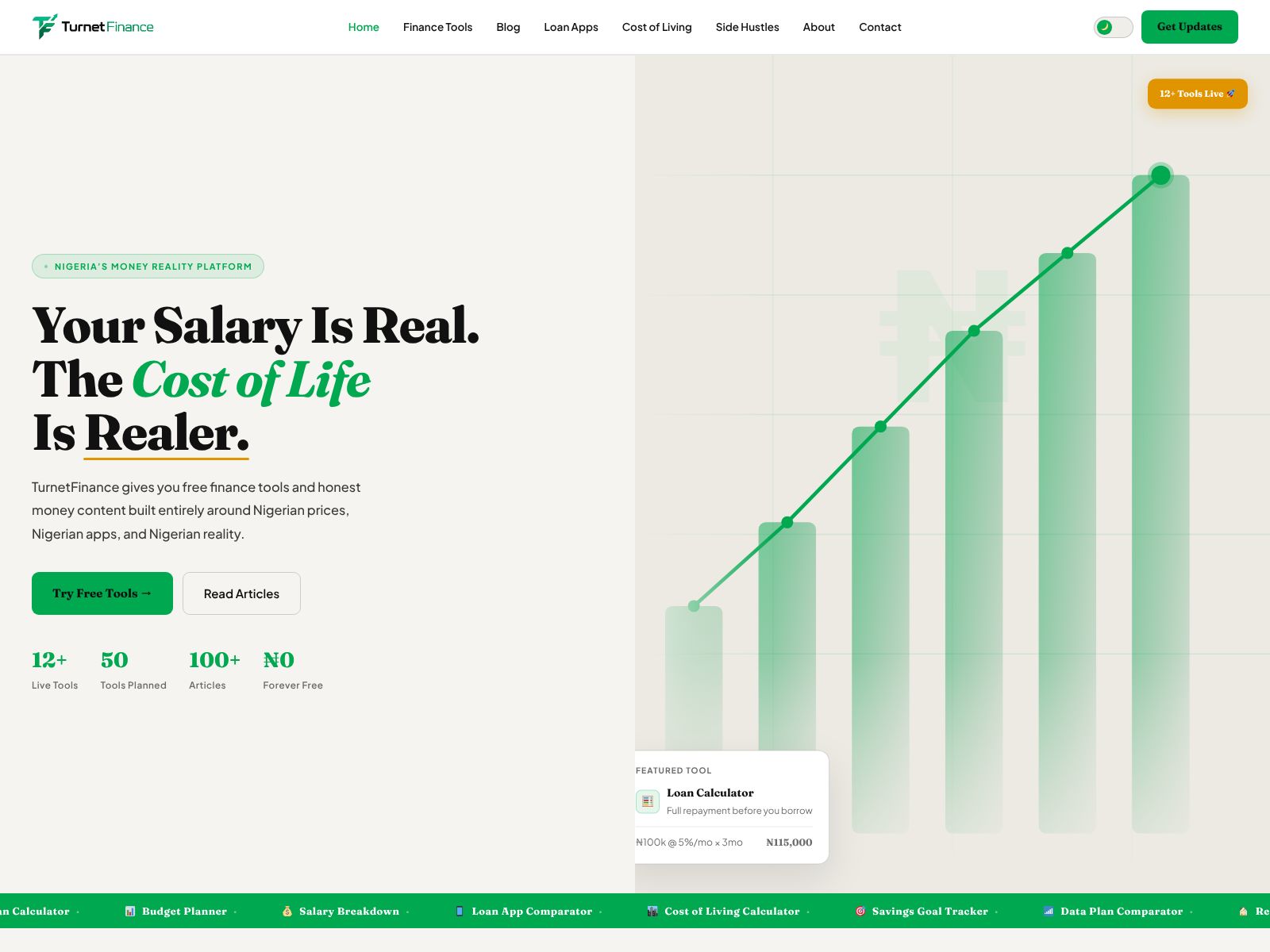
If you earn, spend, save, or send money in Nigeria, you know how tricky it can be to get straight answers that actually reflect Nigerian prices, Nigerian apps, and Nigerian realities. That’s the gap TurnetFinance aims to fill. In this review, I’ll walk you through what TurnetFinance is, the core features you should expect, who it’s best for, how it compares to other options in the market, and a practical way for you (or your team) to use it to make better money decisions without wasting time or data.
Whether you’re a student budgeting your allowance, a salary earner planning your monthly bills, a small business owner managing cash flow, or a freelancer trying to navigate fees and transfers, TurnetFinance positions itself as a simple, no-nonsense resource that stays true to real Nigerian prices and apps. Let’s break it down so you can see if it’s worth adding to your money toolkit.
TurnetFinance gives you free finance tools and honest money content built entirely around Nigerian prices, Nigerian apps, and Nigerian reality. In short: it helps you make money decisions that match how things actually work in Nigeria—without jargon or fluff.
You can read the content and access tools at turnetfinance.ng.
TurnetFinance is built on a simple promise: keep money advice practical, transparent, and local. Here are the features that define the experience.
A lot of money advice online assumes foreign prices, foreign banking systems, and foreign apps. TurnetFinance flips that. The guides, explanations, and examples are grounded in naira figures, fees you actually see on Nigerian apps, and the kinds of tradeoffs you really face here—like network downtime, transaction delays, fuel and data costs, and changing FX conditions.
What that means for you: you won’t waste time translating foreign advice. You’ll see numbers and app references you recognize, which makes it easier to act on the guidance right away.
From bank apps to savings and investment platforms, daily money choices in Nigeria happen inside apps on your phone. TurnetFinance focuses content and tools around the specific apps you use here—so you can quickly compare, navigate settings, avoid common fees, and pick options that fit your lifestyle and budget.
What that means for you: less guesswork when choosing an app or feature, and fewer surprises on fees or limits.
TurnetFinance emphasizes free tools to help you plan, estimate, and compare your options. While the exact mix of tools may evolve over time, the idea stays constant: keep it free and useful for day-to-day Nigerian decisions. Typical examples of tools you can expect from a platform like this include:
What that means for you: you can make a decision quickly, without having to dig through multiple tabs or guess based on outdated info.
TurnetFinance writes the way you talk. Jargon is minimized, and steps are broken down into simple actions. If you’re new to a topic—like setting up a savings goal or comparing transfer options—this style makes it easier to get started and avoid mistakes.
What that means for you: if you learn best with examples and shortcuts, you’ll feel at home. The tone is friendly and practical, not academic.
It’s easy to get lost in hype. TurnetFinance aims to keep its recommendations clear and honest, focused on what works in Nigeria and what doesn’t. Expect clear pros and cons so you can decide if something suits your own situation, not just because it’s popular.
What that means for you: fewer blind spots. If a feature or app has a catch, you’ll see it upfront.
Money decisions here don’t happen in a vacuum. You have to think about data costs, bank queues, app downtimes, charges on small transfers, FX rules, and all the stress we manage daily. TurnetFinance’s content reflects that reality with local examples. It’s about helping you make the “best practical choice,” not the “perfect theoretical choice.”
What that means for you: fewer surprises, more confidence. Advice maps to your daily routine and constraints.
Comparisons are most useful when they answer the questions you actually have: What are the fees? What are the limits? How fast are transfers? What happens when support is needed? TurnetFinance leans into these practical details so you don’t have to experiment blindly.
What that means for you: less trial-and-error. You get to an answer faster and with less risk.
TurnetFinance positions itself around free finance tools and content. That’s a big deal if you’re trying to cut costs. If you ever encounter premium features or third-party product links elsewhere online, always double-check whether you’re paying for an external service, not for TurnetFinance itself.
What that means for you: you can treat TurnetFinance as a free, first-stop resource. If a particular decision requires a paid product (e.g., a specific app or service), that decision is still yours—but you won’t be paying TurnetFinance to get the baseline knowledge.
If you want to get value fast, here’s a simple approach:
That’s it. Money systems stick when they’re easy. TurnetFinance is designed to help you make simple progress and keep going.
If you’re comparing options, here are some well-known alternatives that cover parts of the same space. Each has a different focus, so the best fit depends on what you need right now.
Nairametrics is widely known for Nigerian business and finance news, market updates, and analysis. It’s excellent for staying on top of policy shifts, FX headlines, and corporate developments that can affect your wallet or business operations. If you rely on news-driven context—like fuel price movements or central bank updates—Nairametrics is a strong daily read. It’s not primarily a tools site, but its reporting can inform your money choices.
MoneyAfrica focuses on financial education for Africans, with courses, tips, and community-driven learning. It’s great if you want a structured way to grow your personal finance knowledge beyond quick articles. Expect broader financial literacy modules, longer-term advice, and a community feel. While it’s not built around free calculators the way TurnetFinance is, it can complement your learning if you want guided programs.
NairaCompare helps Nigerians compare financial products, particularly loans and certain banking offerings. If your primary need is to compare rates, eligibility, and features across providers, this is a useful directory-style resource. It’s more product-comparison-driven than content-first, making it a practical complement when you’re at the point of picking a specific financial product.
Investopedia is a global encyclopedia of finance definitions, tutorials, and explainers. It’s great for foundational learning and concept clarity. The catch is that most examples are not Nigeria-specific, so you’ll often need to map the ideas back to local realities (fees, limits, and availability). Use it to understand terms and frameworks, then use a Nigeria-first platform like TurnetFinance to translate those ideas into local action.
PiggyVest and Cowrywise are popular Nigerian saving and investing apps. While their main value is the app experience itself, both maintain blogs and basic guides. If you’re already a user, those guides can help you make better use of features inside the app. However, they’re not neutral comparison hubs by design. Pair their product-focused guides with TurnetFinance’s independent takes if you want broader context and cross-app comparisons.
Stears offers research and data-driven analysis on the Nigerian economy and policy. It’s especially useful if you need macro context for business or investment decisions. While it’s not a personal finance tools platform, its insights can help you understand the bigger forces that shape prices, rates, and risk in Nigeria.
TechCabal covers African tech and business, including fintech. If you follow the app and startup ecosystem, this is a good way to keep tabs on new entrants, product updates, and industry shifts that can affect your daily money tools. Again, not a calculators site—but valuable for staying aware of what’s coming next.
TurnetFinance takes a straightforward approach to a big problem: most money advice online doesn’t match Nigerian reality. By centering content and tools on naira prices, Nigerian apps, and everyday constraints like fees, limits, and uptime, it helps you cut through noise and make quick, confident decisions.
Here’s the bottom line:
If you’ve ever felt like you’re piecing together answers from scattered blogs, ads, and group chats, TurnetFinance gives you a cleaner way forward. Start with one pain point—like a small recurring fee you want to kill or a budgeting tweak you’ve been delaying—visit turnetfinance.ng, use a tool or guide for 10 minutes, and make one specific change this week. You’ll feel the difference fastest when your money decisions are grounded in the reality you live with every day.
As policies, prices, and apps continue to evolve, keep a simple habit: confirm, compare, then commit. With TurnetFinance as your local-first reference, that three-step loop gets lighter—and your money choices get a lot more deliberate.
