RSK.Systems Review (Features, Pricing, & Alternatives)
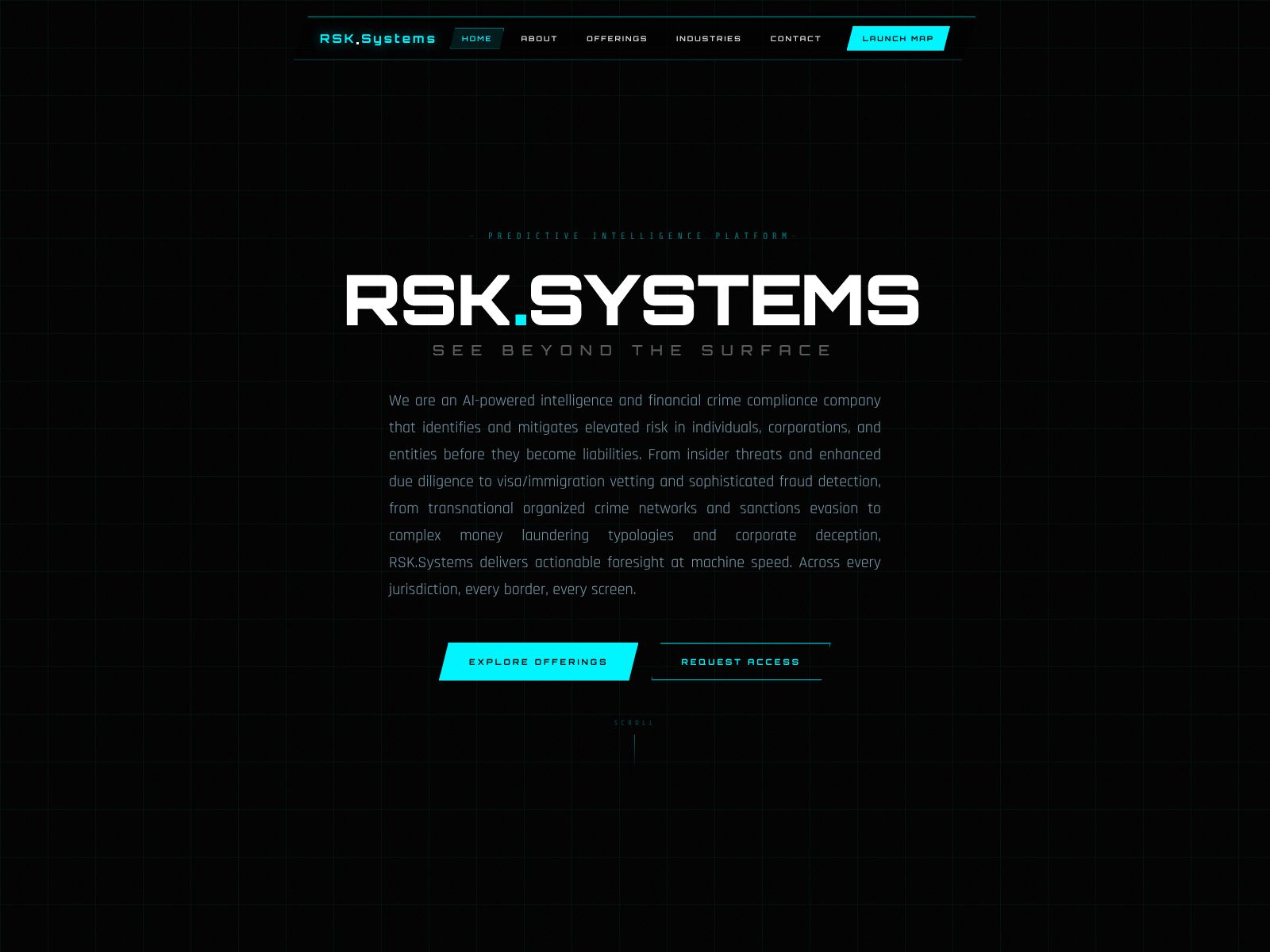
If your team is responsible for keeping financial crime, fraud, and high-risk relationships out of your business, you know the reality: the volume of signals is exploding, the techniques are evolving, and the stakes are higher than ever. RSK.Systems positions itself directly in that gap. It brings AI-powered risk intelligence to identify and mitigate elevated risk in individuals, corporations, and entities—before they become liabilities. From insider threats and enhanced due diligence to visa/immigration vetting, sanctions evasion, organized crime networks, complex money laundering typologies, and sophisticated fraud, the company’s promise is actionable foresight at machine speed—across every jurisdiction, every border, every screen.
In this review and overview, I’ll walk you through what RSK.Systems does in plain language, highlight its standout features, share how to think about pricing, and compare it with top competitors so you can decide where it might fit in your program.
What does RSK.Systems do?
RSK.Systems helps you spot and manage risk tied to people and organizations so you can make safer decisions faster. In practical terms, that means using AI to scan, connect, and interpret many different signals—identity, behavior, networks, and cross-border movement—to detect red flags early. You can then prioritize cases, take action, and document why.
One capability the company emphasizes is its AI-powered Visa Compliance and Immigration Compatibility Prediction platform. Trained on cross-jurisdictional mobility data, behavioral indicators, and identity signals, it’s designed to help you assess whether a person’s background aligns with visa or immigration requirements. The company positions this as the first of its kind. The same core approach—pattern detection across signals—extends to financial crime and corporate risk: think enhanced due diligence, sanctions exposure, fraud, and insider threats.
The big idea is simple: instead of manually stitching together data across countries, languages, and formats, you get an AI system that does the heavy lifting, highlights what matters, and gives you defensible, timely intelligence to reduce false negatives and unnecessary friction.
RSK.Systems Features?
Below is a straightforward look at the capabilities you can expect based on the company’s positioning and publicly shared information. Use this as a checklist to align with your needs and confirm specifics with the vendor.
-
AI-Powered Visa Compliance and Immigration Compatibility Prediction
- Purpose-built models assess applicant compatibility with visa or immigration pathways by analyzing identity signals, behavioral patterns, and cross-border mobility factors that traditional screening may miss.
- Supports a wide range of scenarios: any visa type, immigration status, or background, across global jurisdictions.
- Practical outcome: faster triage for high-volume workflows, consistent assessments, and fewer downstream surprises that lead to rework or regulatory issues.
-
Global Individual, Corporate, and Entity Risk Profiling
- Consolidates and interprets signals that indicate elevated risk at the person, company, and network level.
- Targets real-world threats: transnational organized crime, sanctions evasion methods, corporate deception, and complex money laundering typologies.
- Helps you move beyond simple list-matching to context-aware risk judgments.
-
Enhanced Due Diligence (EDD) and Corporate Deception Detection
- Surfaces connections, beneficial ownership patterns, shell structures, and anomalies that can indicate deception or obfuscation.
- Supports complex investigations where you need to validate claims, map influence, and confirm authenticity across borders.
- Enables deeper, evidence-based narratives for committee review and audit.
-
Sanctions Exposure and Evasion Risk Mapping
- Looks beyond direct list hits to identify behavior and network indicators linked to evasion tactics.
- Prioritizes risk by considering proximity to sanctioned entities, high-risk jurisdictions, front companies, and typological red flags.
- Supports ongoing monitoring as sanctions regimes update.
-
Fraud and Insider Threat Signals
- Analyzes behavioral and identity signals that can suggest account takeover, application fraud, collusion, or insider risk.
- Complements existing alerts by adding context and reducing noise.
- Aims to catch patterns early to prevent losses and reputational damage.
-
Typology-Driven Intelligence
- Models common and emerging money laundering and fraud typologies so your team can quickly map an alert or case to likely patterns.
- Supports analyst training, consistent adjudication, and better SAR/escalation narratives.
- Focuses on machine-speed recognition without losing investigator control.
-
Cross-Jurisdiction, Cross-Border Coverage
- Built to operate across regulatory environments and data formats, giving a more complete picture of risk.
- Useful for multinational businesses, global hiring, cross-border payments, and international vendor onboarding.
-
Actionable Foresight, Not Just Alerts
- Prioritizes clear, defensible signals that guide next steps—triage, investigation, escalation, or approval.
- Designed to reduce alert fatigue while improving true positive rates.
- Supports documentation to explain the “why” behind a decision and maintain auditability.
How your team might use these features day to day:
- Onboarding and Screening: Screen individuals and companies for elevated risk using identity, behavior, and network signals. Assess alignment with visa or immigration requirements where relevant.
- Triage: Prioritize your queue based on risk severity and typology fit so analysts spend time where it matters most.
- Investigation: Expand entity networks, verify claims, surface corporate structures, and assemble evidence for decisions.
- Monitoring: Continuously watch for new risk signals, sanctions changes, or behavior shifts that warrant review.
- Reporting: Produce consistent, defensible write-ups and decision trails for internal oversight and regulators.
Who benefits most?
- Financial institutions and fintechs: AML, KYC/KYB, fraud prevention, sanctions compliance, correspondent banking, and high-risk onboarding.
- Multinationals and marketplaces: Vendor and partner due diligence, global hiring, insider risk reduction, and cross-border operations.
- Travel, mobility, and immigration-focused teams: High-volume visa or immigration assessments, sponsorship programs, and compliance checks.
- Investigations and risk consultancies: Deep-dive casework, network analysis, and specialized EDD.
What to ask on a demo:
- Coverage: Which jurisdictions, languages, and data sources are included? How often are signals refreshed?
- Explainability: How are risk scores or compatibility predictions explained to analysts and reviewers?
- Integration: What delivery options exist—APIs, batch screening, case management connectors, or a web UI?
- Governance: How are models updated, validated, and monitored for bias and drift?
- Privacy and security: How is sensitive data protected, retained, and audited? What certifications or attestations are available?
- Workflow: Can you configure risk thresholds, escalations, and reviewer permissions to match your policies?
RSK.Systems Pricing
Public, line-item pricing is not listed. Given the domain—enterprise risk, compliance, and investigations—you should expect custom, use-based pricing that scales with factors like:
- Number of users and business units
- Volume of screenings, cases, or monitored entities
- Feature tiers (e.g., immigration compatibility, sanctions exposure mapping, enhanced due diligence)
- Data coverage, jurisdictions, and refresh frequency
- Integration complexity and support SLAs
Practical tips when engaging on price:
- Bring 12-month volume estimates and peak concurrency to get accurate quotes.
- Ask for tiered pricing that rewards growth in screenings or monitored entities.
- Clarify what data access is included vs. premium datasets and how overages are handled.
- Request a pilot or proof-of-value tied to clear success metrics so you can validate lift against current false positives/negatives and analyst time saved.
RSK.Systems Top Competitors
If you’re comparing the market, here are well-known alternatives across sanctions/KYC data, fraud, and networked risk intelligence. Each vendor has its own strengths; the right choice will depend on your use case, data needs, and workflow.
-
LSEG World-Check (Refinitiv)
A long-standing standard for PEPs, sanctions, and adverse media screening. Strong for list coverage and regulatory acceptance. Often paired with in-house tools or case managers. If your primary need is trusted screening data at scale, this is a benchmark to compare against.
-
Dow Jones Risk & Compliance
Broad coverage of sanctions, watchlists, adverse media, and beneficial ownership research. Favored for due diligence content quality and editorial standards. Typically integrated into bank compliance stacks for screening and EDD.
-
LexisNexis Risk Solutions (including Bridger/Firco lineage)
A full suite for sanctions and transaction filtering, KYC/KYB data, and fraud/identity tools. Strong fit where you want an integrated compliance and fraud risk ecosystem with robust screening and alerting.
-
Moody’s Analytics (Bureau van Dijk Orbis; GRID)
Company intelligence at depth, beneficial ownership structures, and risk data. Useful for corporate due diligence, complex hierarchies, and cross-border entity resolution—common EDD building blocks.
-
Kharon
Analytical research on sanctions, export controls, and high-risk networks. Known for deep, contextual analysis of evasion and sectoral risks. Often used by teams with elevated exposure to geopolitically sensitive trade.
-
ComplyAdvantage
Modern sanctions/PEP/adverse media screening with real-time updates and machine learning for name matching. Popular with fintechs for speed, APIs, and developer-friendly integration.
-
Quantexa
Entity resolution and network analytics platform for financial crime. Strong when you need to build a single entity view and detect risk through relationships across large, disparate datasets.
-
Sayari
Global corporate records and network analytics focused on opaque markets and complex ownership. A frequent companion for investigations and EDD in challenging jurisdictions.
-
Unit21
Rule-based and machine-learning transaction monitoring and case management, geared toward fast-moving fintechs and mid-market FIs. Often complements data providers by managing alerts and investigations.
-
Recorded Future
Threat intelligence with growing identity and brand risk coverage. Not a pure sanctions/EDD vendor, but helpful if your mandate straddles cyber, fraud, and identity threats.
How RSK.Systems differs in positioning:
- Visa/immigration compatibility focus: While many competitors center on sanctions and KYC, RSK.Systems explicitly emphasizes AI-driven immigration compatibility assessments alongside financial crime. If your workflow spans both, that’s a noteworthy differentiator.
- Behavioral and mobility signals: The pitch goes beyond list matching to interpret behaviors and cross-border patterns—useful where risk hides in how entities interact, not just who they are on paper.
- Typology-guided foresight: Emphasis on connecting signals to typologies (e.g., laundering patterns, evasion methods) to drive faster, more consistent decisions.
Questions to guide your vendor comparison:
- Do we need pure screening data, a decisioning layer, or end-to-end case management?
- How important is visa/immigration compatibility in our workflows?
- What level of network analytics and typology modeling do we require?
- Can we ingest our internal data to enrich risk decisions, and how is entity resolution handled?
- How transparent and auditable are the AI outputs for regulators and internal oversight?
Wrapping Up
RSK.Systems aims to modernize financial crime and immigration risk decisions by moving past static checks to dynamic, AI-driven foresight. The promise is compelling: detect elevated risk earlier, across borders and entities, and give your analysts clear, defensible signals so they can act with confidence. For organizations juggling KYC/KYB, sanctions, fraud, insider threats, and visa/immigration workflows, that breadth matters—especially when cases cross jurisdictions and standard screening breaks down.
That said, the right fit always depends on your specific needs. If you’re primarily buying screening data for basic compliance, a classic data provider might be enough. If you need deep corporate registries or extensive case management, other platforms may be a better core system with RSK.Systems as a complementary intelligence layer. And if visa/immigration compatibility is central to your process, RSK.Systems’ focus there could be a decisive advantage.
Before you decide, ground the evaluation in your real workloads. Bring a representative sample of cases, define success metrics (true positives, false negatives, time-to-decision, investigation effort), and ask for a structured pilot. Validate coverage in your high-risk geographies. Confirm model transparency, governance, and data protection practices. And make sure the integration path—API, batch, or UI—fits how your teams actually work.
If you’re ready to push beyond surface-level screening and build a forward-leaning risk function, RSK.Systems deserves a close look. It’s built for a world where signals are scattered, borders are porous, and risk hides in patterns—exactly where AI can make the difference between a close call and a clean bill of health.