



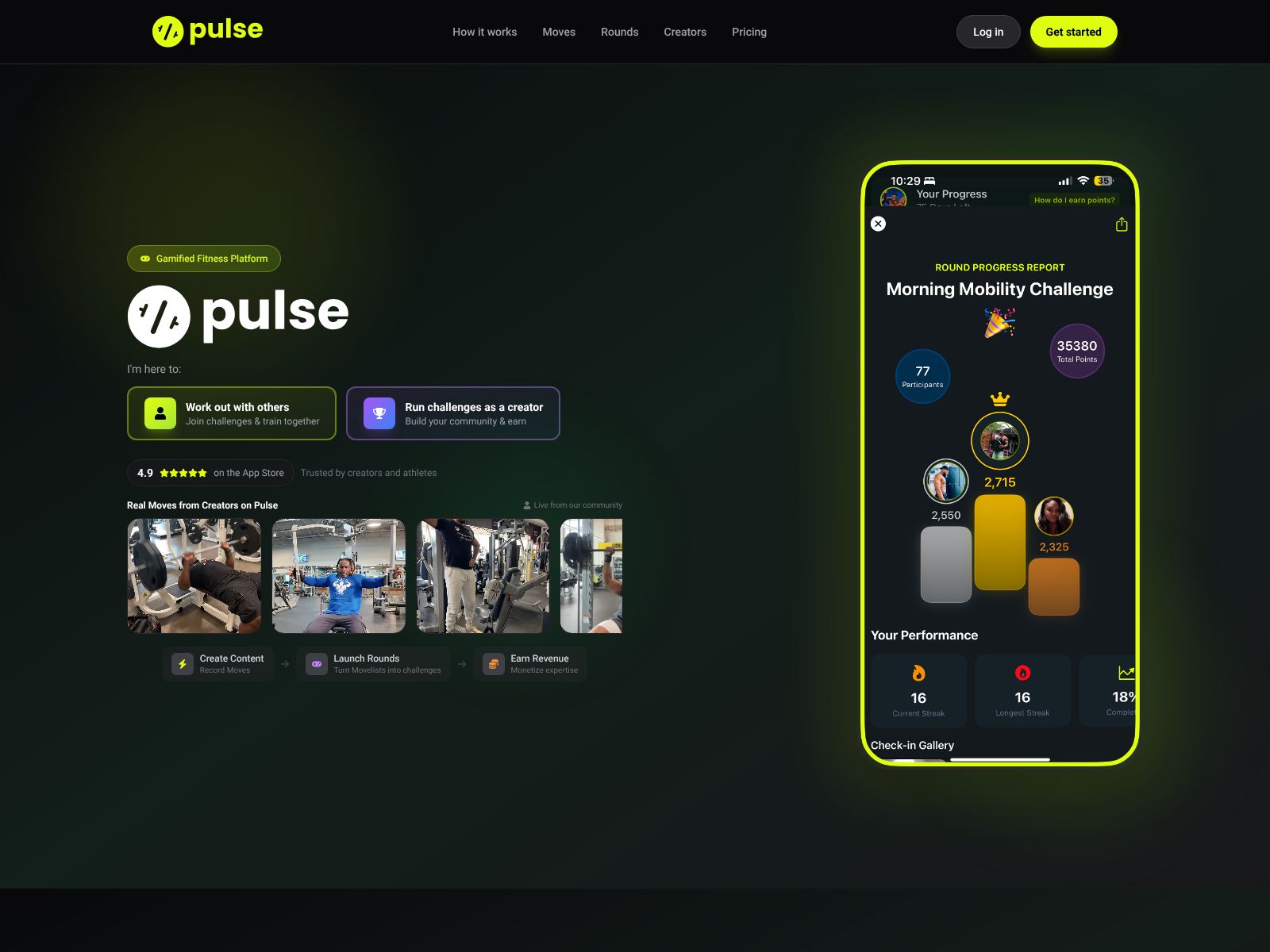
If you’re looking for a fitness app that feels more like a smart training partner than a static plan, Pulse is aiming squarely at you. Found at fitwithpulse.ai, it positions itself as an AI-powered companion that builds workouts around your goals, adapts to your progress, and keeps you accountable without the friction of complex spreadsheets or cookie‑cutter templates.
In this review, I’ll walk you through what Pulse does in plain language, the features that will matter to you day to day, how pricing typically works for tools like this, and the top alternatives you should compare it against. By the end, you’ll have a clear sense of whether Pulse belongs in your fitness stack—or whether a different option might fit your goals, budget, and training style better.
Before we dive in, one quick note: apps evolve quickly. Features, integrations, and pricing can change. Use this review as a practical guide, and confirm the latest details directly on the Pulse website.
Pulse is an AI fitness companion designed to help you plan, track, and improve your workouts. You tell it your goals, preferences, time available, and equipment. It uses that information to create a plan, then adjusts as you log sessions and share feedback. Think of it as a coach that learns from your data and nudges you toward consistent progress—without overwhelming you with jargon.
Instead of handing you a static program, Pulse iterates with you: what’s hard, what’s too easy, what days you can train, and how your body responds. Over time, it aims to guide you toward better habits, smarter progressions, and measurable results.
Below are the core capabilities you can expect from an AI-driven fitness platform like Pulse, with an emphasis on how they help you in the real world. For the most accurate and current list of features, check the official site.
Pulse builds training plans based on your inputs—your goals (strength, fat loss, endurance, or a blend), your schedule (how many days and for how long), and your available gear (full gym, home setup, or bodyweight only). The benefit is simple: you start with a plan that fits your life right now, not an idealized version of it.
As you log workouts, Pulse responds. If a session was too easy, it nudges the next one up. If you felt crushed, it scales back. This adaptive loop matters because it keeps you in the sweet spot—challenged enough to grow, but not so overreached that you burn out or stall.
You’ll see straightforward cues for each exercise: how to set up, what to feel, and what to avoid. The aim is to build confidence and reduce the mental load in the gym. If you’re newer to lifting or returning from a break, this guidance helps you move well and stay consistent.
Strength and conditioning usually respond to small, steady increases. Pulse focuses on repeatable progressions—adding reps, weight, sets, or tempo over time—so you can see tangible wins. Consistent micro‑progress is how PRs add up.
Workouts are only part of the picture. Pulse encourages basic habits—sleep, steps, mobility, hydration—without turning your day into a full-time tracking project. You get a few meaningful levers to pull so you can build momentum and maintain it.
If you like structure but want flexibility, Pulse offers a starting plan that you can tune: swap exercises you dislike, adjust days, or add accessories you enjoy. The goal is to keep adherence high by fitting your preferences instead of fighting them.
Expect simple charts and trends that answer questions like: Am I getting stronger? How many sessions did I complete this month? Where am I most consistent? The best fitness apps don’t drown you in data; they highlight what drives action.
Life happens. Pulse makes it easy to move sessions, shorten a workout when you’re short on time, or swap a heavy day for something lighter when recovery isn’t great. This flexibility is often the difference between skipping and staying in the game.
Whether you have a full barbell setup or a single pair of dumbbells, Pulse adjusts your plan to the equipment at hand. If you’re traveling, you can select limited equipment and keep workouts on track without starting over.
Gentle reminders and check-ins help you build a streak without pressure. The best nudges are timely and helpful—think “You’ve got a 30-minute session today—want help trimming it to 20?” rather than “Why did you miss yesterday?” Expect the former.
Many AI fitness apps connect with popular wearables and health apps to streamline tracking. If Pulse supports your devices, that means less manual logging and more accurate insights. Be sure to check the site for the latest supported integrations and privacy details.
Pulse’s adaptive approach makes it welcoming for beginners and useful for intermediates who value structure with flexibility. If you’ve outgrown generic programs but don’t need a fully custom coach, this middle ground often feels “just right.”
Your training data is personal. Review Pulse’s privacy policy to see what’s collected, how it’s used, and what you can delete. A good rule of thumb: only connect the data sources you find valuable, and adjust permissions any time.
Pricing can change, so use this as a framework rather than a quote. Fitness apps like Pulse commonly offer:
To decide what’s best for you, consider how often you train and how long you plan to use the app. Monthly plans are flexible if you’re experimenting; annual plans make sense if you’re committed and want the best value.
A practical weekly flow might look like this:
This simple loop—plan, do, reflect—multiplies results because it compounds across weeks and months with minimal friction.
Most free programs are built for the average person with lots of assumptions. Pulse reduces those assumptions by listening to your inputs, watching your progress, and adapting. You trade a little setup and logging for a lot more relevance and support—usually a trade worth making if you value sustainable progress.
Choosing a fitness app is a bit like choosing a training partner—fit matters. Here are several credible alternatives you should compare with Pulse. Each has a slightly different focus, so match your pick to your goals and preferences.
Fitbod builds strength-focused workouts based on your available equipment and past training history. It’s known for solid exercise libraries and straightforward progressions. If your main goal is building muscle and you like data-driven weight suggestions, Fitbod is a strong contender.
Freeletics emphasizes bodyweight training and high-intensity workouts, often with minimal equipment. It’s great for people who want efficient sessions anywhere. If you thrive on short, intense conditioning and structured plans, it’s worth a look.
Future pairs you with a human coach who builds custom plans and checks in with you directly. It’s more expensive but offers hands-on accountability. If you want a real person texting you and tailoring every detail, Future is hard to beat.
Caliber blends coaching, education, and programming with a focus on strength and physique goals. It’s a good pick if you want more guidance than a pure app but at a lower cost than premium 1:1 coaching.
Copilot offers personalized coaching with real trainers, often at a mid-range price point compared to traditional coaching. If you’ve struggled to stay consistent and want human accountability, this is a compelling option.
Apple’s service shines with polished, studio-style classes across strength, cardio, yoga, and more. It’s less personalized but highly convenient, especially if you’re already in the Apple ecosystem and want variety and ease over customization.
Peloton’s app delivers top-tier instruction and an engaging community across cycling, treadmill, strength, and mobility classes. It’s ideal if you love live or on-demand classes and want motivation from charismatic instructors.
Strong is a clean, fast workout logger for lifters who know what they want to do. If you prefer to bring your own program and just need a great tracking experience, Strong is excellent.
If you use a wearable like Whoop, Garmin, or Oura, their coaching features can guide recovery and training load decisions. They’re less about building full programs and more about optimizing intensity and recovery based on physiological signals.
Ladder offers team and coach-led programs you can follow with a community. If you’re motivated by being part of a group and following a named coach’s plan, this is a strong fit.
Price and features vary widely. The best choice is the one you’ll stick with. Try a few for a week each and see which experience you look forward to using.
Pulse aims to make smart training simple: tell it what you want, show up consistently, and let the plan adapt as you do. If you’ve been bouncing between free templates and random workouts, an AI companion like Pulse can bring the structure and accountability you’ve been missing—without demanding a ton of your time or attention.
Here’s a quick decision checklist to help you move forward:
If a flexible, data-aware program sounds like what you need, give Pulse a try at fitwithpulse.ai. Whether you’re starting fresh or getting back on track, the right plan is one you can stick to—week after week, month after month. Consistency wins, and a thoughtful tool can make staying consistent a lot easier.
