OBDURIX Review (Features, Pricing, & Alternatives)
Stealthy attackers have learned to live quietly inside big organizations. They slip past point-in-time scans and wait for the right moment to move, exfiltrate data, or cause disruption. If your team is still relying on periodic checks and manual investigations, you’re likely leaving gaps open for Advanced Persistent Threats (APTs) to exploit.
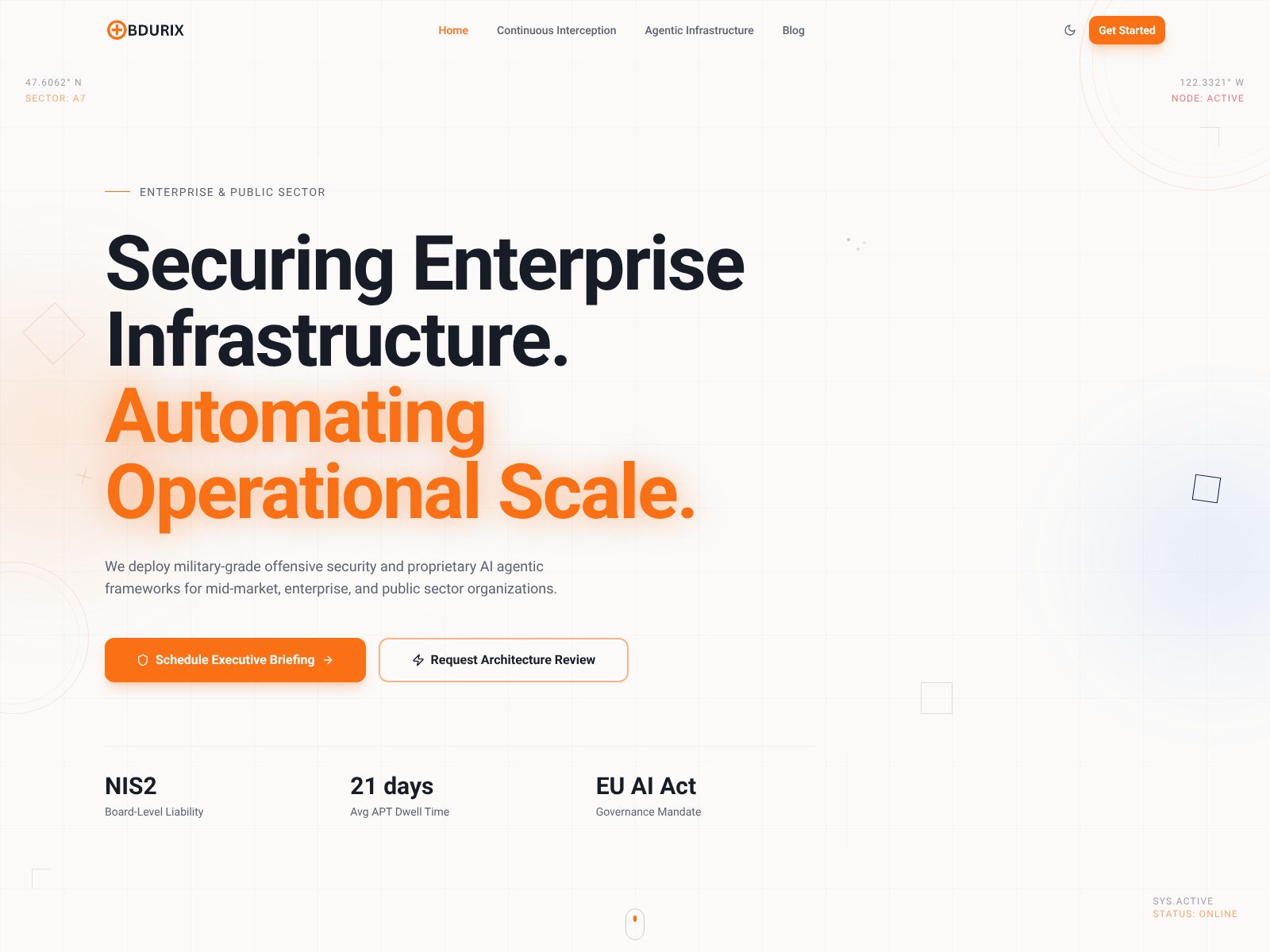
OBDURIX is a deep-tech cybersecurity platform built to close those gaps with continuous, proactive defense. Instead of scanning on a schedule, it runs all the time, hunts threats in real time, and acts with oversight from your security team. If you run critical infrastructure, operate in the cloud, or need to align with regulations like NIS2 and DORA, this platform aims to give you a smarter, more autonomous way to protect your enterprise.
In this review, you’ll get a clear view of what OBDURIX does, its core features, where it fits in your stack, how to think about pricing, and what alternatives to consider.
What does OBDURIX do?
OBDURIX helps your organization automatically find, study, and stop stealthy attackers in your environment, all the time—not just during scheduled scans. It uses AI and built-in deception techniques to catch advanced threats and gives your team control over what actions it takes.
Who is OBDURIX for?
- Security leaders who need continuous defense against APTs and living-off-the-land techniques.
- Organizations with board or regulator pressure to prove ongoing readiness, especially under NIS2 or DORA.
- Enterprises running complex, cloud-first or hybrid environments that change frequently.
- SOCs that want autonomous help with threat hunting, triage, and containment—but with human oversight in the loop.
- Critical infrastructure entities that need rapid interception capabilities with strong auditability.
What makes OBDURIX different?
Several design choices set OBDURIX apart from legacy tools that scan occasionally and alert later:
- It runs continuously, not just at fixed times. You get ongoing visibility and action, not snapshots.
- It pursues “defensive offense.” Instead of passively waiting for alerts, it actively hunts, lures, and intercepts attackers using deception and orchestrated countermeasures.
- It uses a multi-layer AI framework, coordinating deep learning models to analyze behavior and plan responses.
- It always includes a human-in-the-loop control point, so you define the guardrails and approve sensitive actions as needed.
- It learns from real adversarial activity gathered across deployments, allowing it to train specialized models and get sharper over time.
- It’s built to integrate with enterprise cloud environments and support regulatory alignment requirements from day one.
OBDURIX Features
Here’s a breakdown of the core capabilities you can expect, explained in plain language.
1) Continuous APT Hunting
Instead of running scheduled scans and hoping nothing slips by in between, OBDURIX is always looking for stealthy activity. It watches patterns, connections, and behaviors in real time to detect attackers that try to blend in or move slowly.
2) Automated Defensive Offense
When OBDURIX sees suspicious behavior, it doesn’t just alert your team and sit back. It can:
- Lure attackers into safer, controlled areas to study them.
- Isolate and contain risky activity to limit spread.
- Disrupt attacker workflows by changing the environment they rely on.
All of this happens under rules your team defines, with options for approvals when needed.
3) Multi-Layer AI Orchestration
OBDURIX uses multiple AI layers to improve both detection and response. Different models handle different tasks—some focus on recognizing patterns, others plan safe next steps. This layered approach helps reduce noise and improve decision quality.
4) Human-in-the-Loop Oversight
Autonomy is powerful, but you stay in control. OBDURIX includes a strict human-in-the-loop mechanism for sensitive actions, policy changes, and continuous tuning. You set thresholds, approvals, and guardrails so the system works the way your organization expects.
5) Dynamic Deception and Honeypots
Attackers love to explore and test your environment. OBDURIX uses that curiosity against them. It builds and manages dynamic honeypots and breadcrumbs that attract adversaries to safe zones, where their methods can be observed, logged, and disrupted.
6) Attack Surface Mapping
The platform learns your environment as it hunts. It maps complex relationships and paths that attackers might use, then adjusts defenses and decoys to close off opportunities and force adversaries into controlled traps.
7) Adversarial Data Capture
Every encounter generates rich data about the attacker’s tools, steps, and preferences. OBDURIX uses this proprietary adversarial data to train and refine highly specialized models. Over time, the system becomes more precise and faster to react.
8) Cloud-Ready Integration
OBDURIX is designed to integrate with enterprise cloud infrastructure. That means it’s built for modern, distributed environments where assets spin up and down, and where identity, data, and workloads move frequently.
9) Real-Time Interception and Containment
When an attacker moves, seconds matter. The platform is built to intercept in the moment—shaping the environment to block lateral movement, restrict access, and keep threats from escalating.
10) Regulatory Alignment Support (NIS2, DORA)
If you need to show your board or regulators that you have continuous monitoring, proactive controls, and clear oversight, OBDURIX helps you generate the evidence. Its operational model supports auditability, logging, and reporting that align with the intent of modern regulations.
11) SOC Workflow Integration
You can connect OBDURIX to your existing workflows. While details will depend on your stack, it is built to integrate with enterprise tooling so analysts can work within familiar processes for triage, ticketing, and incident response.
12) Safety and Governance Controls
Because the platform is capable of acting on its own, it ships with strong policy and governance controls. You can set what’s allowed, what requires review, and how the system escalates decisions to human operators.
How OBDURIX works (high level)
At a simple level, here’s the typical flow you can expect once OBDURIX is connected to your environment:
- Integration and discovery: You connect OBDURIX to relevant parts of your enterprise infrastructure. The platform begins learning your normal patterns and mapping potential attack paths.
- Deception fabric: OBDURIX deploys and tunes dynamic honeypots and breadcrumbs that look real to attackers but are safe for your business.
- Continuous observation: The system monitors activity in real time, correlating signals and behaviors that might indicate stealthy movement or privilege misuse.
- Autonomous countermeasures: Based on rules and policies you set, OBDURIX can lure, isolate, or intercept suspicious activity and request human approval for sensitive actions.
- Adversarial learning: Each encounter helps refine the models. Over time, the platform builds a deeper understanding of attacker tactics in environments like yours.
- Reporting and alignment: You receive clear, auditable records of what happened, what was blocked, and how the system performed—useful for leadership and regulatory reviews.
Getting started: onboarding and operations
If you’re thinking about deploying OBDURIX, here’s a straightforward way to plan the rollout:
- Define goals: Clarify the outcomes you want (faster containment, APT visibility, NIS2/DORA readiness, etc.).
- Scope integrations: Identify the cloud and enterprise systems where you need coverage first. Start with the highest-risk areas.
- Set guardrails early: Decide which actions can be automated and which need human approval. Tighten over time as trust grows.
- Pilot and baseline: Run in a pilot scope to build baselines and tune detections without disrupting production.
- Expand and measure: Roll out to more assets once performance is solid. Track measurable outcomes like mean time to detect/respond.
Pricing: what to expect
OBDURIX is an enterprise platform. Pricing is typically quote-based and tailored to your environment. While the company does not publish list pricing, most organizations can expect cost to depend on:
- Size and complexity of the environment (users, endpoints, workloads, regions).
- Deployment scope and modules used (e.g., deception breadth, response automation depth).
- Required integrations, support, and service levels.
- Regulatory and reporting requirements.
Practical tips to get a reliable estimate:
- Bring a simple asset and identity inventory, focusing on critical systems.
- Outline your regulatory obligations (NIS2, DORA) and any audit deadlines.
- Share incident history and pain points to scope what “good” looks like for you.
- Ask for a pilot proposal with clear success metrics and exit criteria.
If you want exact numbers, the most direct route is to contact the vendor at obdurix.com with your scope and timing.
Benefits you can expect
- Less dwell time: Continuous hunting reduces the window where attackers can hide.
- Higher signal quality: Multi-layer AI and deception raise detection precision.
- Faster containment: Automated countermeasures limit spread and damage.
- Operational confidence: Human-in-the-loop oversight keeps your team in control.
- Regulatory support: Clear logs and continuous controls support compliance reviews.
- Learning advantage: Adversarial data makes the models sharper over time.
Potential challenges and considerations
- Change management: Autonomous systems can be a cultural shift for SOCs used to manual control. Start with tight guardrails.
- Integration work: As with any enterprise platform, integration and tuning require coordination with infrastructure and security teams.
- Complex environments: Highly distributed, multi-cloud setups may need phased rollouts and careful policy design.
- Budget planning: Expect enterprise pricing; build a business case around measurable risk reduction and regulatory readiness.
- Complement, don’t replace: OBDURIX adds depth to your stack, but it doesn’t remove the need for other layers like EDR/XDR, identity security, and SIEM.
How OBDURIX fits in your security stack
Think of OBDURIX as a continuous, autonomous layer focused on advanced adversaries and stealthy behavior. It complements, rather than replaces, your existing investments:
- With EDR/XDR: It can augment endpoint and workload defenses by catching evasive behavior patterns and coordinating containment.
- With SIEM/SOAR: It can enrich investigations and automate safe interventions while providing human approval points for higher-risk actions.
- With identity and network controls: It can pressure-test pathways that attackers love (privilege escalation, lateral movement) and help close gaps with deception and interception.
OBDURIX Top Competitors and Alternatives
There’s no one-to-one alternative that matches every OBDURIX capability, but you may compare it with tools in these categories:
Autonomous detection and response
- Darktrace: Known for self-learning AI across network and cloud, with autonomous response features.
- Vectra AI: Focuses on network detection and response, including attacker behavior analytics in hybrid environments.
- SentinelOne Singularity: Endpoint-centric autonomous defense with behavioral AI and some deception capabilities after acquisitions.
- CrowdStrike Falcon: Broad EDR/XDR platform with strong telemetry, threat intel, and partner ecosystem.
- Palo Alto Networks Cortex XDR: Correlates data across endpoints, network, and cloud with automated response options.
Deception platforms
- Attivo Networks (now part of SentinelOne): Deception for identity and lateral movement detection.
- Acalvio: Deception technology focused on scalable decoys and breadcrumbs across environments.
- Illusive: Identity-focused deception to surface unauthorized movement and credential misuse.
Cloud and network threat detection
- Microsoft Defender for Cloud: Cloud-native detection and posture management within the Microsoft ecosystem.
- ExtraHop: Network detection and response with real-time analytics across east-west traffic.
- Mandiant (Google Cloud): Managed detection and response, incident response, and threat intelligence services.
When to choose OBDURIX over these alternatives:
- You want continuous, autonomous countermeasures that go beyond alerts to include active lures and interception.
- You value built-in, dynamic deception and adversarial learning as core design pillars rather than add-on modules.
- You need strong human-in-the-loop governance and regulatory support that aligns with NIS2/DORA expectations.
When an alternative might be a better fit:
- You prefer an endpoint-first model with deep OS-level controls and already standardize on a specific EDR/XDR vendor.
- You mainly need deception-as-a-service without broader autonomous orchestration.
- You want a service-led MDR model with hands-on analysts running the program for you.
Security, privacy, and governance
Any autonomous system should be deployed with clear rules. OBDURIX supports this with human-in-the-loop oversight and policy controls. As you evaluate the platform, ask about:
- Approval workflows for sensitive actions and how they’re documented.
- Data handling: what’s collected, how long it’s retained, and how it’s protected.
- Data residency options and compliance mappings relevant to your industry.
- Audit trails and reporting features to support internal reviews and regulators.
- Controls for exceptions, maintenance windows, and emergency overrides.
How to measure value
To build a solid business case and track ROI, define these metrics up front:
- Dwell time reduction: Days-to-minutes improvement for stealthy threat discovery.
- MTTD/MTTR: Mean time to detect and respond, split by severity tiers.
- Containment rate: Percentage of high-risk events intercepted before lateral movement.
- False positive rate: Signal precision over time as models learn your environment.
- Regulatory readiness: Time and effort saved preparing for NIS2/DORA reviews.
- Playbook automation: Number of interventions safely automated with oversight.
OBDURIX in regulated environments (NIS2, DORA)
Both NIS2 and DORA raise the bar for continuous monitoring, incident readiness, and board-level accountability. OBDURIX aligns with that direction by:
- Providing always-on detection and interception to reduce risk exposure windows.
- Enforcing oversight through human-in-the-loop controls and clear policies.
- Capturing detailed logs of what happened, when, and why for audit purposes.
- Supporting evidence generation your leadership can use in reviews and reports.
As always, confirm specifics with your compliance team and the vendor to ensure coverage fits your exact obligations.
OBDURIX vs. legacy scanning tools
It helps to make the contrast clear:
- Legacy approach: Periodic scans give you a snapshot in time. Attackers who move slowly or hide between scans can go undetected.
- OBDURIX approach: Continuous hunting and deception raise the cost for attackers and create fewer safe windows to hide. The system adapts and intercepts in real time, with your team steering sensitive decisions.
What to ask in a demo
- Show me how dynamic deception is deployed and tuned for our environment.
- Walk me through a real-time interception scenario with human-in-the-loop approvals.
- How do you reduce false positives, and what does model tuning look like over 90 days?
- What does a typical rollout timeline look like for an environment our size?
- How do you support NIS2/DORA evidence and leadership reporting?
- How does the platform integrate with our existing SOC tools and workflows?
Pros and cons summary
Pros
- Continuous APT hunting and real-time interception.
- Built-in deception that turns attacker curiosity into your advantage.
- Multi-layer AI with human-in-the-loop safety controls.
- Adversarial learning that sharpens detection over time.
- Cloud-ready design and regulatory alignment support.
Considerations
- Requires careful onboarding, policy setting, and change management.
- Enterprise-caliber tool with enterprise-level pricing expectations.
- Best as a complementary layer, not a replacement for core EDR/XDR or SIEM.
Frequently asked questions
Is OBDURIX a SIEM or EDR replacement?
No. Think of it as a continuous, autonomous defense and deception layer that complements your existing tools.
Can it act without human approval?
Yes, within rules you define. Sensitive actions can require human approval through the built-in oversight mechanism.
Does it support hybrid environments?
OBDURIX is designed to integrate with enterprise cloud infrastructure and can operate across complex environments. Discuss your exact on-prem and hybrid needs with the vendor during scoping.
How fast can it be deployed?
Timelines vary by environment size, integration needs, and policy design. A phased rollout starting with high-risk areas is common.
What about false positives?
Multi-layer AI and deception are designed to increase signal quality. Your policies and the human-in-the-loop mechanism help keep actions safe as the system learns.
Real-world use cases
- Stopping lateral movement: Catch an attacker exploring credentials and quietly isolate the activity.
- Deception-led forensics: Lure a threat actor into a controlled decoy and gather intel on their tools and methods.
- Cloud drift control: As resources change, keep a continuous watch for abnormal access patterns or privilege escalation paths.
- Regulatory preparation: Maintain continuous monitoring and generate clean reports for board and regulator reviews.
Who should evaluate OBDURIX right now?
- Security teams preparing for NIS2 or DORA who need stronger evidence of continuous control.
- Leaders who worry about stealthy, long-dwell adversaries that evade legacy scans.
- Enterprises with fast-moving cloud estates who want automated, safe countermeasures.
- Critical infrastructure operators who require real-time interception capabilities.
OBDURIX at a glance
- Category: Autonomous enterprise defense with built-in deception.
- Core strengths: Continuous hunting, real-time interception, human-in-the-loop governance, adversarial learning.
- Ideal environment: Cloud-forward enterprises and critical infrastructure with regulatory demands.
- Primary value: Shrinks attacker dwell time, increases detection precision, and boosts regulatory readiness.
Wrapping Up
Legacy, point-in-time scanning isn’t enough for today’s attackers. OBDURIX was built for a world where threats are patient, creative, and evasive. By combining continuous hunting, dynamic deception, multi-layer AI, and strict human oversight, it offers a modern way to find and stop advanced adversaries before they become costly incidents.
If you run a complex enterprise environment, especially under NIS2 or DORA pressures, OBDURIX deserves a close look. Come prepared with clear goals, a phased rollout plan, and guardrails for autonomous actions. Ask for a pilot that proves faster detection, cleaner signal, and safer containment. The payoff is a defense posture that’s proactive, adaptable, and measurably aligned with the demands of today’s threat landscape.
To learn more or request a demo, visit obdurix.com.