




Private markets have grown into a massive, long-term asset class. Yet the way many teams still manage private-market instruments—SAFE notes, convertible notes, early equity agreements, and LP interests—often relies on scattered PDFs, email chains, and institutional memory. That approach creates risk. It slows down transfers, complicates audits, and makes secondaries harder than they need to be.
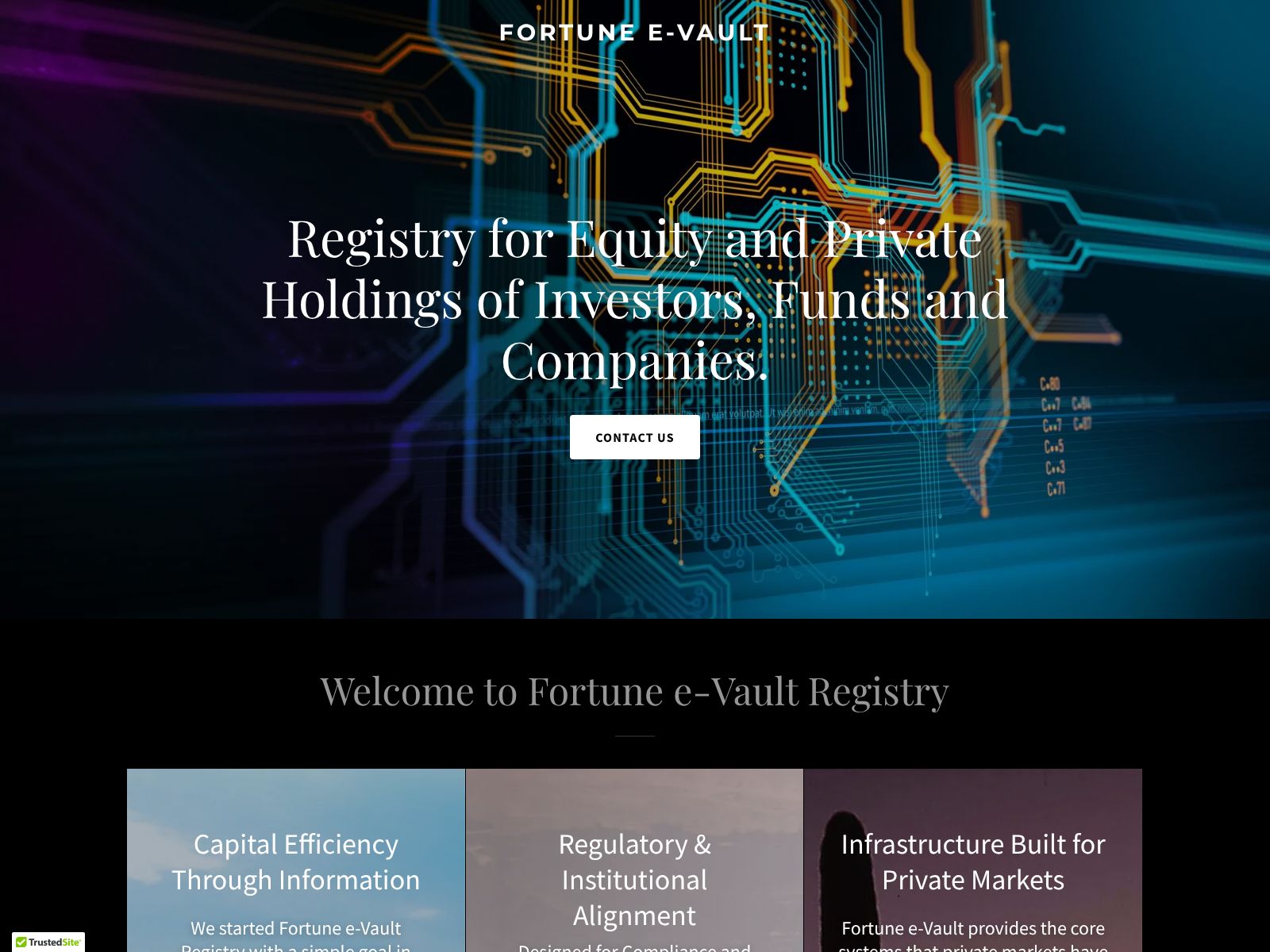
Fortune e-Vault by RegisterStocks is built to fix that. It’s an e-vault and e-registry designed to bring structure, provenance, and transfer readiness to private-market assets. Instead of being a marketplace, it serves as the infrastructure layer—the registry and vault—that underpins how assets are recorded, amended, and prepared for compliant secondary transfer, bundling, and securitization. If you manage, invest in, or administer private assets, this approach can reduce operational friction and build trust into your workflows.
In this review, I’ll walk you through what Fortune e-Vault does, how its features translate into day-to-day value, what pricing considerations you should expect, and how it compares to top competitors. The goal is to help you decide whether Fortune e-Vault fits your team’s needs and where it might sit in your broader private-markets stack.
Fortune e-Vault safely stores and structures private-market documents and registrations so your assets are verifiable, auditable, and ready for transfer. It replaces manual document handling with verified custody, a structured registry of rights and amendments, and workflows designed to support compliant secondary transactions. It’s market infrastructure, not a marketplace.
Fortune e-Vault focuses on institutional-grade recordkeeping for private-market instruments. Below are the core feature areas and how they help you reduce risk, speed up deals, and improve alignment with investors, auditors, and counterparties.
At the heart of the platform is an e-vault that serves as a system of record for private-market documents. Rather than keeping critical files in shared drives and email threads, your team gets a single source of truth with verified custody. This helps you:
Provenance is essential in private markets, where the path from original agreement to final state can span years, multiple parties, and many amendments. Fortune e-Vault is built to maintain that chain clearly and consistently.
Private-market documents contain rights, obligations, and conversion terms that change over time. Fortune e-Vault pairs custody with an e-registry that reflects those rights in a structured way. That means:
This structure helps avoid costly mistakes and speeds up diligence. When an auditor, buyer, or LP asks for clarity, you can show it—without digging through folders or relying on memory.
Private-market assets are increasingly traded, packaged, or pledged, but many aren’t “transfer ready.” Missing documents, unclear rights, and inconsistent records can stall a deal or reduce an asset’s value. Fortune e-Vault is designed with transfer readiness in mind:
If your team has ever hit delays during a secondary because of scattered records, you’ll understand why this matters. Ready-to-transfer assets close faster and inspire more confidence with counterparties.
Fortune e-Vault supports instruments you likely touch every day, including:
By bringing these instruments into a single infrastructure layer, your team can manage complex portfolios without mixing tools or reinventing workflows every time you face a conversion, amendment, or transfer.
The platform is built for institutions that need defensible, auditable processes. Its design centers on:
If you’re building an evergreen capital strategy, facilitating venture secondaries, or investing over long horizons, this level of rigor can make the difference between a fast, clean process and a time-consuming review that introduces deal risk.
Private assets don’t stay static. SAFEs convert, side letters are added, LP interests are transferred, and funds introduce amendments. Fortune e-Vault is built to keep these lifecycle events orderly:
This is especially helpful for teams juggling multiple vintages, cross-fund positions, or multi-entity relationships across a long timeline.
Because Fortune e-Vault is infrastructure rather than a marketplace or brokerage, you can slot it alongside other tools without unwanted overlap. Keep using your legal, accounting, and analytics systems; Fortune e-Vault provides the trustworthy registry and vault foundation they can reference.
To make the features concrete, here are a few examples you might recognize:
RegisterStocks does not publicly list pricing details for Fortune e-Vault. That’s common for institutional infrastructure and private-markets software, where price depends on scope and complexity. If you’re evaluating the platform, expect pricing to vary based on factors like:
When you speak with the RegisterStocks team, consider asking:
It’s also worth framing your cost-benefit discussion around risk reduction and time saved. Faster, cleaner audits and transfers can translate into real value: reduced legal back-and-forth, fewer deal delays, and more predictable close timelines. If your team manages many instruments or expects to grow secondaries activity, those benefits add up quickly.
Fortune e-Vault sits in the “infrastructure for private markets” category, with a focus on custody, registration, and transfer-readiness. Most alternatives approach the space from adjacent angles—cap table management, transfer agency, or issuance/marketplace platforms. Here are common options teams compare, along with how they differ conceptually. Always verify current capabilities and fit for your use case.
What it is: A leading cap table platform with transfer agent services, widely used by startups and venture investors. Carta also supports secondary processes and marketplace-adjacent offerings.
How it compares: Carta is strong for equity administration across company lifecycles. If you want deep cap table workflows and integrated transfer agent services for company equity, Carta is a top choice. Fortune e-Vault is more narrowly focused on e-vault custody and a structured registry across private instruments (including SAFEs, convertibles, and LP interests) with an emphasis on provenance and transfer readiness. Use cases can overlap, but the design center differs.
What it is: A modern cap table platform popular with early and growth-stage companies for equity issuance and management.
How it compares: Pulley helps companies manage equity, option grants, and investor updates. If you mostly need clean cap table operations, it’s a strong option. Fortune e-Vault focuses on custody and registration across a broader set of private-market documents and on preparing assets for compliant transfer rather than cap table workflows alone.
What it is: A long-established transfer agent and registrar with services for private companies and funds.
How it compares: If you need enterprise-grade registrar services from an incumbent provider, Computershare is a common selection. Fortune e-Vault’s pitch centers on a modern e-vault and e-registry for private instruments, designed to add provenance and transfer readiness as a foundational layer. Your choice may come down to whether you prefer a traditional transfer agent service model or a purpose-built platform focused on document custody and structured registration.
What it is: A transfer agent supporting private companies with equity administration and related corporate actions.
How it compares: Similar to Computershare, AST offers transfer agent services with deep experience. Fortune e-Vault can serve as a complementary or alternative layer if your priority is verified custody, structured rights tracking, and preparing assets (including LP interests, SAFEs, and convertibles) for transfer or bundling.
What it is: A platform for issuing and managing digital securities with built-in compliance features; it also operates marketplace components.
How it compares: Securitize approaches the problem from issuance and tokenization, often tied to a marketplace. Fortune e-Vault is not a marketplace; it is infrastructure focused on registry and vault functions across conventional private-market instruments. If your strategy involves tokenized issuance and marketplace liquidity, Securitize may be a fit. If you want a registry-and-vault foundation for traditional private assets, Fortune e-Vault aligns better.
What it is: A cap table and equity management platform popular with European startups and scale-ups.
How it compares: Ledgy is strong for company equity administration, employee options, and investor reporting. Fortune e-Vault is oriented toward a broader set of private-market instruments and the provenance plus transfer-readiness layer behind them. They can be complementary if you need both equity admin and infrastructure for non-equity instruments.
Examples: Forge, EquityZen, and other marketplaces focused on trading private shares and interests.
How they compare: These platforms are marketplaces or brokerage-driven offerings that match buyers and sellers. Fortune e-Vault is explicitly not a marketplace. Instead, it provides the custody, registration, and preparation layer that can make assets more straightforward to transact—potentially improving outcomes if you decide to use a marketplace or run a bilateral secondary later.
Every team’s private-markets stack is different. Here are practical questions to help you decide whether Fortune e-Vault is a good fit:
If you answered yes to several of these, Fortune e-Vault could give you leverage right away. It’s especially compelling for teams that have grown beyond basic file storage but don’t want to flip into a marketplace model to get structure and readiness. You keep control while making your assets easier to understand, evaluate, and transact.
Implementation is often where infrastructure pays off—or stalls. As you plan, consider the following:
Good planning up front turns the e-vault into a shared source of truth, not another system to maintain.
Fortune e-Vault is not a cap table platform, a marketplace, or legal counsel. You may still want:
That’s by design. Fortune e-Vault focuses on being a strong, neutral foundation other tools and stakeholders can trust.
While the platform’s technical details are not publicly enumerated in marketing materials, the emphasis on verified custody, provenance, and auditability signals a security-first mindset. If you evaluate Fortune e-Vault, ask for details on data protection, encryption, access controls, incident response, and how they validate provenance and maintain integrity over time. For institutional teams, clarity on these points is essential.
If you sit at the intersection of legal, finance, operations, and investing, Fortune e-Vault gives you a system that aligns all parties on what is true today and how it got there.
Next steps are straightforward:
A clear initial scope sets you up to realize value quickly while laying the groundwork for broader adoption.
Private markets carry trillions in value, but too often the systems behind them are fragmented and fragile. Fortune e-Vault by RegisterStocks offers an answer: a dedicated e-vault and e-registry that bring provenance, structure, and transfer readiness to your private-market instruments. It’s not a marketplace. It’s the market infrastructure layer that helps you manage SAFEs, convertibles, early equity agreements, and LP interests with the clarity and confidence institutional investing demands.
If you’re preparing for secondaries, building an evergreen capital strategy, or simply want to reduce operational risk, the combination of verified custody, structured registration, and auditability can be transformative. Pricing is tailored to your scope, so the best way to evaluate fit is to share your portfolio profile and transfer goals with the team and see how the onboarding plan would look.
In a world where speed and trust decide outcomes, Fortune e-Vault gives you a foundation both sides of a transaction can believe in. If you’re ready to move beyond fragmented files and workflow improvisation, it’s worth a serious look.
