

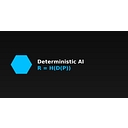


If you run AI in a high-stakes environment, you already know the sting of randomness. The same prompt can yield different answers. Costs creep up as you retry calls, tune prompts, and over-provision infrastructure. Compliance teams worry about traceability, auditors ask for evidence you can’t easily produce, and product teams struggle to ship AI features with the reliability of normal software. DeterministicAI.tech steps directly into this gap. It promises to turn AI from a best-effort system into a bit-consistent, auditable engine you can trust in production. In this review, I’ll walk you through what DeterministicAI.tech does, how it works at a high level, who benefits most, the standout features, and which alternative tools you might compare it with. By the end, you’ll know whether this platform aligns with your roadmap for stable, compliant, and cost-efficient AI.
Before we dive in, here’s the core issue DeterministicAI.tech tackles: modern LLMs and RAG systems are stochastic. In plain English, they are unpredictable by design. That’s exciting for creativity but painful for enterprise use. You want identical inputs to produce identical outputs—especially in finance, healthcare, government, and legal settings. DeterministicAI.tech provides a “Deterministic Wrapper” that makes your AI stack reproducible, auditable, and predictable without forcing you to retrain models or rip and replace your setup. It sits around your model and retrieval pipeline, standardizes how requests are handled, and enforces consistent behavior. The result is AI that acts like dependable software rather than an improvisational assistant.
You can use DeterministicAI.tech with existing models like GPT, Claude, and Llama and with existing retrieval strategies in your RAG pipelines. That’s essential for teams that already have pilots and prototypes. The goal is to harden what you have, not start over. And it’s built for real enterprise needs: reduced hallucinations, lower compute costs via smarter deduplication and execution paths, and audit-grade traceability that meets strict compliance expectations. If you’re under pressure to push AI into production without sacrificing governance or budget, this platform is designed with you in mind.
DeterministicAI.tech makes your AI outputs consistent, traceable, and repeatable. It wraps around your existing LLM and RAG stack so identical inputs produce the same verified results every time, with detailed logs for auditing and measurable cost savings.
Below are the headline capabilities and why they matter for your team. Each point is written in plain language so you can quickly map features to your use cases.
• Zero-Hallucination Mode: Enforces predictable behavior so identical queries produce the same verified output every time, significantly reducing hallucinations and response variance in production.
• Deterministic Wrapper: Acts as a reliability layer around your model and retrieval system, turning stochastic generation into reproducible, software-like execution while preserving accuracy and usefulness.
• Works with Your Models: Supports models you already use, including GPT, Claude, and Llama, so you avoid expensive retraining or fine-tuning to achieve consistency.
• RAG Hardening: Wraps your retrieval pipeline so document selection, ranking, and context assembly behave consistently, reducing drift in which sources are read and how they’re used.
• Audit-Grade Traceability: Produces tamper-evident logs for every step of the pipeline, including input, context, system parameters, and outputs, so you can prove what happened and why.
• Compliance-Ready Logging: Creates a clear lineage of decisions, making it easier to meet internal controls and external regulatory standards in finance, healthcare, legal, and government contexts.
• Canonical Deduplication: Identifies and de-duplicates repeated work so you spend less on repeated prompts, redundant retrieval, and overlapping results across teams and workflows.
• Optimized Execution Paths: Routes requests along the most efficient path, reducing compute and storage costs by 20% to 70% depending on your workloads and usage patterns.
• Plug-and-Play Integration: Installs as an external layer rather than a rip-and-replace project, allowing faster onboarding and lower risk to your current architecture.
• Consistent Prompting: Normalizes prompts, parameters, and system instructions so your team’s behavior is standardized across environments and releases.
• Controlled Temperature and Seeds: Locks down generation parameters to ensure bit-consistent outputs where needed, while still allowing controlled exploration in designated routes.
• Confidence Thresholding and Fallback: Supports policies that gate uncertain outputs, escalate to human review, or fall back to trusted knowledge sources to keep quality high.
• Version-Pinned Behavior: Stabilizes behavior over time, so you can ship features with confidence and only change outputs when you opt into a new, documented version.
• Testable and Reproducible: Lets you create tests that actually hold up. You can rerun the same input and get the same output, which makes QA meaningful and debugging faster.
• Runbook-Friendly: Gives SRE and platform teams insight into how AI requests are processed, making it possible to build playbooks and SLAs that reflect real, stable behavior.
• Enterprise Security Posture: Wraps inference requests and logs in a way that reduces leakage risk, enforces access policies, and confines sensitive data movement to defined paths.
• Clear Escalation Paths: When a query falls outside approved knowledge or certainty bounds, you can define deterministic handling: abstain, defer, or route to a supervisor queue.
• Multi-Environment Consistency: Keeps dev, staging, and production aligned by standardizing inputs, parameters, and reference data so there are no “works on my machine” surprises.
• Cost Governance: Gives finance and platform teams predictable cost curves by eliminating random retries and unnecessary recomputation across similar workloads.
• Documentation and Explainability: Produces human-readable traces that help stakeholders understand why an answer was produced, reducing the black-box factor that slows adoption.
• Team-Wide Standardization: Aligns data science, engineering, and compliance under one consistent operating model, making it easier to scale AI across business units.
• Minimal Change Management: Because the wrapper sits outside your models, you keep your preferred providers and weights while gaining deterministic outcomes.
• Measurable ROI: Combines quality gains (fewer hallucinations) with direct savings (reduced compute and storage waste) and indirect savings (less rework, easier audits).
What makes these features powerful is how they compound in the real world. When your outputs stabilize, your prompts stabilize. When your prompts stabilize, your tests hold up. When your tests hold up, your releases accelerate. Each step reduces friction and cost. Over time, the platform turns AI from a fragile experiment into standard infrastructure that product, compliance, and finance can all trust.
On pricing, DeterministicAI.tech positions itself as an enterprise platform. While public pricing is not listed, you can expect packaging aligned to seat counts, request volume, or managed environments. The key is total cost of ownership. If you currently pay for multiple retries, sprawling prompt variants, manual QA, and post-hoc compliance prep, the combination of canonical deduplication, optimized execution paths, and audit-ready logs can produce net savings even before you account for risk reduction. The company cites 20% to 70% cost reductions depending on workload mix and adoption depth; your mileage will vary based on how chaotic your current setup is and how widely you deploy the wrapper.
If you’re evaluating this for your team, a simple way to test the ROI case is to pick a target workflow—say, a customer support assistant or a contract analysis tool—where inconsistent outputs and retries are common. Instrument it with DeterministicAI.tech, pin parameters, enable deduplication, and enforce the zero-hallucination policy. Track your before/after metrics: response variance, failure rate, compute minutes, rework time, and compliance exceptions. In many shops, a small pilot like this will pay for itself by revealing exactly where randomness was costing you time and money.
There isn’t another platform that markets an identical “deterministic wrapper” in the same terms, but several categories overlap: guardrails frameworks, model monitoring, evaluation/observability, and AI governance. If you’re surveying the landscape, here are nearby tools worth a look, along with how they differ conceptually.
• NVIDIA NeMo Guardrails: A guardrails framework to constrain model behavior and reduce unsafe outputs; strong on policy and safety patterns, lighter on end-to-end determinism and audit lineage compared to a dedicated deterministic wrapper.
• Guardrails AI (framework): An open approach to validating and structuring LLM outputs; valuable for schema enforcement and checks, but you’ll likely need additional layers for full reproducibility and compliance-ready logging.
• LangSmith (by LangChain): Observability and evaluation for LLM applications; excellent for tracing, dataset curation, and performance measurement, while determinism and tamper-evident audit trails may require complementary tooling.
• HoneyHive: Experimentation and evaluation for LLM apps; good for comparing prompts and models, with testing support, but primarily focused on iteration rather than guaranteeing identical outputs in production.
• Humanloop: Prompt and workflow management to improve LLM app reliability; strong in iteration loops, human feedback, and evaluation, with less emphasis on strict determinism across runs.
• Weights & Biases Prompts: Experiment tracking for prompts and models; helpful for research and fine-tuning workflows, not purpose-built to enforce bit-consistent production behavior.
• Fiddler AI: Model monitoring and explainability; oriented toward traditional ML governance and monitoring, which can complement a deterministic production layer but doesn’t replace it for LLM consistency.
• Truera: AI quality and governance; supports model risk management and auditing for ML systems, often used alongside application-layer controls for generative AI.
• Arthur AI: Monitoring, fairness, and drift detection; valuable for oversight and compliance, with less focus on deterministic inference paths for generative workflows.
• Lakera Guard: Safety and prompt-injection defenses; focuses on protecting inputs and outputs rather than enforcing reproducible, audit-grade determinism across the whole pipeline.
• Llama Guard (Meta): A safety classifier to filter responses and prompts; useful as a component in a safety stack, but not a full enterprise determinism framework.
• Vellum: LLM operations platform for prompt and model management; helpful for productionizing AI features, with overlapping goals in reliability but different focus areas.
If your top priority is stable, repeatable outputs and tamper-evident logs across both LLM and RAG layers, DeterministicAI.tech is more specialized for that goal than pure observability or guardrails tools. If you primarily need evaluation, safety policies, or monitoring dashboards, the alternatives above can be strong fits either on their own or as complements.
You can think of DeterministicAI.tech as the missing reliability layer for enterprise AI. It takes the creativity of modern LLMs and the practicality of RAG and turns them into a predictable system you can run like software. If you are in a regulated industry—or simply a company that values repeatability and cost discipline—this mindset shift is critical. AI stops being a probabilistic gamble and becomes infrastructure you can test, ship, and audit.
The highlights are straightforward. Zero-Hallucination Mode reduces random variance so you can promise consistent answers to your users and auditors. The Deterministic Wrapper sits around your stack, not inside your model weights, so you keep your current providers and avoid retraining. Audit-grade, tamper-evident logs provide a reliable record of what happened, which is essential for compliance and internal reviews. Canonical deduplication and optimized execution paths drive down redundant work and, with it, your cloud bill. Together, these pieces address the biggest blockers you likely face when moving AI from pilot to production: trust, cost, and control.
If you’re wondering whether your team needs this, consider your tolerance for unpredictable behavior in core workflows. In customer service, do you accept different answers for the same question? In healthcare documentation, will you tolerate creative variation that could affect care? In finance and legal, can you pass audits without precise logs that tie inputs to outputs? If your answer is “no,” determinism becomes more than a nice-to-have—it becomes a prerequisite to scale.
A practical next step is a time-boxed pilot. Choose a workflow where inconsistent answers, hallucinations, or rising compute costs are recurring pains. Integrate DeterministicAI.tech as a wrapper, lock down your temperature and seeds, and turn on the logging and deduplication features. Define clear success criteria: lower variance, fewer corrections, less compute usage, faster approvals from compliance, and improved customer satisfaction. Use the pilot’s before/after data to decide whether to expand across teams. This approach keeps the risk low and makes the ROI case concrete.
As for pricing, you should expect a conversation tailored to your scale and security needs. While the sticker price matters, the economics are best judged across the full lifecycle: less rework for engineers, lower cloud costs, fewer compliance hours, and faster time-to-release. Many organizations underestimate the drag of nondeterminism—multiple retries per request, long debugging cycles, and difficulty reproducing incidents for root-cause analysis. When those costs are quantified, the appeal of a deterministic layer becomes clear.
Where does this leave DeterministicAI.tech in the broader market? It occupies an emerging but crucial category: turning generative AI into dependable enterprise infrastructure. Guardrails products improve safety, observability tools help you measure and iterate, and governance platforms track ML risk. DeterministicAI.tech complements those layers by making the core outputs reproducible and auditable. If you want your AI to behave like software—predictable, testable, and controllable—this platform deserves a close look.
In the end, your AI strategy should reflect your risk posture and your operational goals. If you need creativity above all else, randomness can be a feature. But if you need reliability, accountability, and lower costs at scale, determinism is the winning play. DeterministicAI.tech brings that playbook to your existing models and RAG systems without forcing you to rebuild your stack. For many enterprises, that combination—predictable behavior, audit-grade records, and clear cost savings—is the difference between AI pilots that stall and AI products that ship.
If you want to learn more or request a demo, visit the company’s website at https://www.deterministicai.tech/. Ask about deployment options, data handling, and how their tamper-evident logging integrates with your current compliance tools. Most importantly, bring a real workflow to the conversation so you can see the impact firsthand. The promise here is simple: take the power of generative AI and give it the reliability of traditional software. If that’s your goal, DeterministicAI.tech is built for you.
