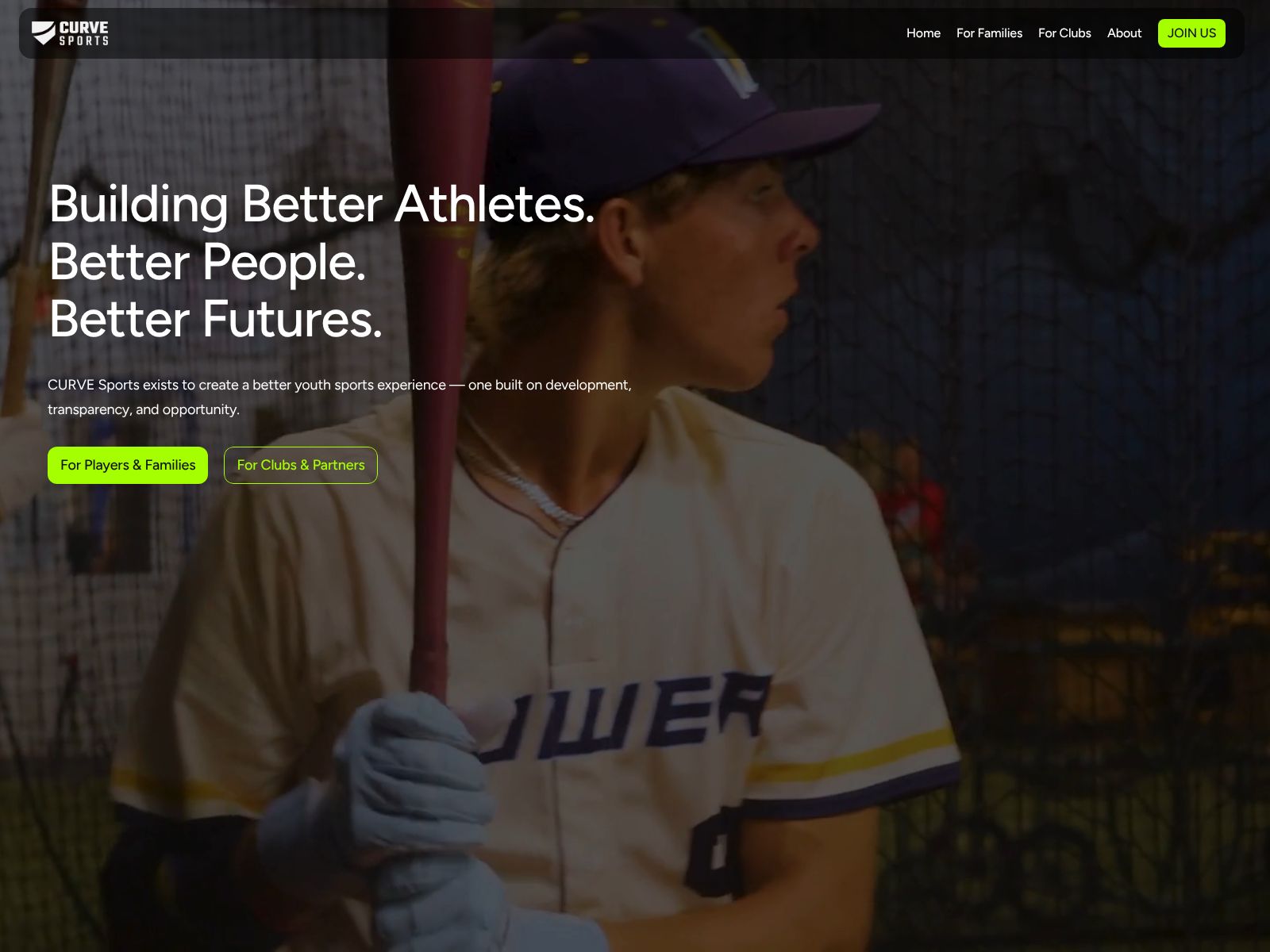
CURVE Sports Review & Overview
If you run or play for a youth travel baseball club, you’ve probably felt the growing pains that come with more teams, more events, and higher expectations. You need a clear way to evaluate players, a shared plan for development, and a system that keeps everyone—club directors, coaches, athletes, and families—on the same page. That’s the gap CURVE Sports aims to fill. In this review, you’ll get a clear overview of what CURVE Sports does, the features that matter, how it compares to other options, and whether it’s right for your program.
At its core, CURVE Sports wants to align testing, training, competition, and recruiting, so clubs and athletes can rely on consistent data and benchmarks. It’s designed to help you create a player pathway from youth to college-bound ages, while keeping the day-to-day tasks—like evaluations and communication—organized and actionable.
Below, you’ll find a simple breakdown to help you decide if CURVE Sports fits your program’s goals.
What does CURVE Sports do?
CURVE Sports is a youth baseball platform that connects independent travel clubs and standardizes how players are tested, trained, evaluated, and communicated with. It gives clubs, coaches, athletes, and families shared tools, consistent benchmarks, and clear development paths—so performance data is comparable across teams and seasons. It also partners with the Diamond Sports Foundation to support access and long-term outcomes for athletes and communities.
CURVE Sports Features
Here’s a concise look at the most important features you’ll use day-to-day. The emphasis is on objective testing, shared development standards, and practical club operations that keep your whole ecosystem aligned.
1) Objective Player Testing and Comparable Benchmarks
One of CURVE Sports’ core strengths is standardized player testing. The platform gives you a way to run objective assessments across your club and compare results over time and across teams. When every team captures data the same way, you get apples-to-apples visibility into progress and potential. This can include timed speed, throwing and exit velocities, mobility or agility screens, and other measurable skills common in baseball testing, with results organized so coaches and families can interpret them quickly.
- Consistency: Run the same tests across multiple teams and age groups with shared protocols, so you can track improvement and identify gaps.
- Comparability: Benchmark individuals within a team, against age groups in your club, and across CURVE’s broader club network.
- Clarity: Turn raw numbers into simple visuals and summaries that coaches can use in plans and players can understand.
2) Shared Development Standards and Player Pathways
CURVE Sports focuses on the long view: each athlete’s path from early development through advanced competition and recruiting. Instead of leaving development to chance, your club can align coaching language, expectations, and training standards. This creates a shared “north star” for skills and behaviors at each age band.
- Age-based Milestones: Define what “good” looks like by age or level, then track how players stack up against those milestones.
- Skill Progressions: Map hitting, pitching, fielding, baserunning, and physical development skills into logical progressions that build year over year.
- Role Clarity: Give coaches a framework for evaluations and plans; give families and players a clear picture of where they are and where they’re going.
3) Training Plans and Individualized Development
Once you have objective testing and defined standards, CURVE Sports helps you turn that information into action. Coaches can assign individualized or small-group training plans that connect directly to test results and player goals.
- Targeted Work: Focus training time on the two or three areas that will make the biggest difference.
- Trackable Tasks: Assign drills, workloads, and checkpoints; log completion and see trends in adherence and improvement.
- Feedback Loops: Use updated testing and coach notes to adjust plans and keep players improving without guesswork.
4) Competition Alignment
CURVE Sports ties training and testing into the rhythm of actual competition. Whether it’s preseason combines, in-season tracking, or postseason evaluations, the system keeps your data organized and relevant to game performance.
- Seasonal Cadence: Build a testing and evaluation calendar that lines up with tryouts, practices, tournaments, and showcases.
- Role-Based Insights: Identify who’s ready for expanded roles, who needs targeted reps, and where to re-balance lineups for development.
- Year-Over-Year Continuity: Keep each player’s data and notes intact across seasons and coaches, so progress isn’t lost when teams change.
5) Recruiting-Ready Profiles and Alignment
As players age into recruiting windows, CURVE Sports focuses on making their data coherent and credible. Because testing is standardized across the network, a college coach can interpret results with confidence and compare players fairly.
- Centralized Profiles: Maintain a single source of truth for academic info, testing, and development history.
- Credible Data: Objective testing protocols help make metrics meaningful, not just anecdotal.
- Pathway Guidance: Align training and event choices with realistic college targets based on benchmarks and growth trends.
6) Club, Coach, Athlete, and Family Tools
CURVE Sports is built for your whole ecosystem, not just a single role. That means each stakeholder gets tools suited to their responsibilities.
- For Clubs: Configure standards, testing protocols, evaluation templates, and communication settings once and roll them out across teams.
- For Coaches: Manage rosters, run evaluations, assign training plans, leave notes, and message players and families in one system.
- For Athletes: See your benchmarks, training plans, and progress in a clear, motivating format; understand exactly what to work on next.
- For Families: Keep track of schedules, messages, and development updates without juggling multiple apps or losing context.
7) Communication and Coordination
Smooth communication is a big part of player development. CURVE Sports helps streamline messages and expectations, so information is consistent and easy to find.
- Unified Messaging: Reduce confusion with centralized updates, coach notes, and reminders.
- Contextual Info: Tie communication to evaluations and training plans so messages are actionable, not just announcements.
- Less App Hopping: Keep communications near the data and plans they reference.
8) Analytics and Dashboards
Data is only useful if you can interpret it quickly. CURVE Sports gives you dashboards that highlight what matters for your role—so directors see program-wide patterns, coaches see team and player needs, and families see clear next steps.
- Program Health: Identify strengths, gaps, and trends across age groups and teams.
- Player Progress: Visualize improvements, plateaus, and outliers in a way that prompts action.
- Decision Support: Use evidence for roster moves, training focus, and recruiting timelines.
9) Standardization Across a Growing Club Network
CURVE Sports isn’t only a tool for your team; it’s part of a larger network that uses shared standards. That helps your data travel well—across teams, across seasons, and even from one CURVE-aligned club to another if a family relocates.
- Comparable Data: Evaluate fairly across cities and states with common testing and evaluation language.
- Knowledge Sharing: Adopt best practices established by the broader network.
- Continuity for Players: Maintain a clear development record even if a player changes teams within CURVE’s ecosystem.
10) Access and Community Impact (Diamond Sports Foundation)
CURVE Sports works with the Diamond Sports Foundation to support access and long-term outcomes for athletes and communities. For many clubs, this matters: performance platforms shouldn’t widen gaps—they should help close them. This focus on access can make it easier for clubs to build inclusive programs while still holding high development standards.
- Equity Mindset: Align your development program with pathways that consider long-term outcomes for more athletes.
- Community Partnerships: Explore ways to connect resources and opportunities beyond your immediate roster.
11) Security, Privacy, and Control
When dealing with youth data, privacy and control matter. While CURVE Sports emphasizes shared standards and comparable data, clubs should expect role-based permissions and safeguards that respect athlete and family privacy.
- Role-Based Access: Keep sensitive information limited to the right people at the right time.
- Data Stewardship: Preserve development histories while respecting family preferences and compliance requirements.
12) Onboarding and Support
New systems live or die by how well they’re adopted. CURVE Sports aims to make onboarding straightforward so coaches can use it quickly and families don’t feel overwhelmed. Typical rollouts include setting standards, importing rosters, running baseline testing, and establishing a simple coach workflow for evaluations and training plans.
- Stepwise Launch: Start with a pilot (one or two teams), then expand once workflows feel natural.
- Templates and Training: Use pre-built evaluation templates and training structures to get going fast.
- Change Management: Communicate the “why” to coaches and families—focusing on clarity, fairness, and development outcomes.
13) Who CURVE Sports Is Best For
CURVE Sports is a strong fit if you:
- Run a multi-team travel program and want consistent evaluations and plans across every coach and age group.
- Believe in objective testing and want to make training decisions based on data instead of guesswork.
- Need a clear player pathway from youth development to recruiting windows—with credible, comparable benchmarks.
- Value coordination among club directors, coaches, athletes, and families without juggling multiple disconnected tools.
It may be less necessary if you’re a very small team focused only on scheduling and group messaging, or if you already have a highly customized tech stack for testing, training, and recruiting and don’t need a unified system.
14) Pros and Cons at a Glance
- Pros:
- Unified, objective approach to player testing and development.
- Standardized benchmarks that travel across teams and seasons.
- Clear tools for coaches, athletes, and families to act on data.
- Alignment with competition and recruiting timelines.
- Mission-oriented partnership with the Diamond Sports Foundation.
- Cons:
- Requires initial buy-in and training to standardize evaluations across all coaches.
- Clubs with deeply entrenched processes may need time to adapt templates and workflows.
- If you only need basic scheduling or scorekeeping, CURVE Sports may be more than you need.
15) Pricing and Availability
CURVE Sports is built for clubs of different sizes and needs. Pricing is typically based on program scope and features. If you’re exploring CURVE Sports, the best path is to request a demo and quote to see what a rollout would look like for your club’s structure and goals. You can learn more and get in touch at curvesports.com.
CURVE Sports Top Competitors
There isn’t a one-to-one equivalent to CURVE Sports that covers the same breadth of standardized testing, development, competition alignment, and recruiting within a single platform. That said, several tools compete in parts of the stack. If you’re comparing options, here are notable alternatives and where they overlap:
- TeamSnap
- What it does well: Team management, scheduling, messaging, payments for youth sports.
- Overlap: Communication and coordination for teams and families.
- Difference: Not centered on standardized testing and long-term development benchmarks.
- SportsEngine (by NBC Sports Next)
- What it does well: Registration, websites, communications, and league management for youth organizations.
- Overlap: Club operations and communication.
- Difference: More administrative; less focused on objective player testing and development standards.
- GameChanger (by Dick’s Sporting Goods)
- What it does well: Live game scoring, stats, and team communication.
- Overlap: Communication and performance insights during games.
- Difference: Game-centric; not a full development pathway or standardized testing platform.
- Driveline TRAQ
- What it does well: Training management for baseball and softball; integrates with performance tools and sensors.
- Overlap: Training plans, data capture, and athlete tracking.
- Difference: Powerful training workflow; not a club-wide standardization and recruiting alignment platform in the same way.
- Prep Baseball Report (PBR) / Perfect Game (PG)
- What they do well: Showcases, events, rankings, and recruiting exposure.
- Overlap: Player testing and visibility for recruiting.
- Difference: Event-driven and scouting-focused; not a holistic club development and communication system.
- SportsRecruits / NCSA
- What they do well: Athlete profiles and communication tools for college recruiting.
- Overlap: Recruiting alignment and athlete visibility.
- Difference: Recruiting platforms first; CURVE Sports aims to connect recruiting to standardized development and testing.
- LeagueApps
- What it does well: Registration, payments, and program operations for youth sports.
- Overlap: Club administration and parent communication.
- Difference: Strong operations layer; not centered on standardized performance testing and development pathways.
- Diamond Kinetics / Rapsodo / Blast Motion (hardware and analytics)
- What they do well: Sensor and radar-based skill measurement and feedback for hitting and pitching.
- Overlap: Objective performance metrics and training feedback.
- Difference: Hardware-first; CURVE Sports focuses on club standards, organization, and integrated pathways.
How to compare: If your primary problem is operations (registrations, payments, and websites), a general youth sports system may suffice. If your focus is event exposure, a showcase organization might fit. But if your top priorities are objective testing, coherent development plans, consistent club standards, and recruiting alignment in one place, CURVE Sports is designed to cover that broader ground.
Wrapping Up
Youth baseball keeps getting more competitive and more complex. That can be a good thing—if you have the right structure. CURVE Sports gives you that structure by connecting objective testing, shared development standards, competition cadence, and recruiting alignment into a single platform. For clubs, it means clear expectations and better decisions. For coaches, it’s a simple way to turn evaluations into targeted training. For athletes and families, it’s a transparent path forward that makes progress visible and actionable.
If you lead a travel club or oversee multiple teams, the big win is standardization: one language, one set of benchmarks, and one workflow that everyone follows. That consistency cuts down on confusion, helps coaches coach, and gives players a fair, credible way to show improvement. Add in the mission-driven partnership with the Diamond Sports Foundation, and you get a platform that’s not just about performance—it’s about outcomes and access.
Next steps: Assess your club’s current gaps. Are evaluations inconsistent across coaches? Do you have a clear, shared progression for each age group? Are training plans tied to objective results? If the answer to any of these is “not yet,” CURVE Sports is worth a closer look. You can explore the platform and request a demo at curvesports.com.
Bottom line: If you want a development-first system that makes data comparable, plans actionable, and communication clear—for clubs, coaches, athletes, and families—CURVE Sports delivers a strong, modern foundation for the long-term success of your program.