




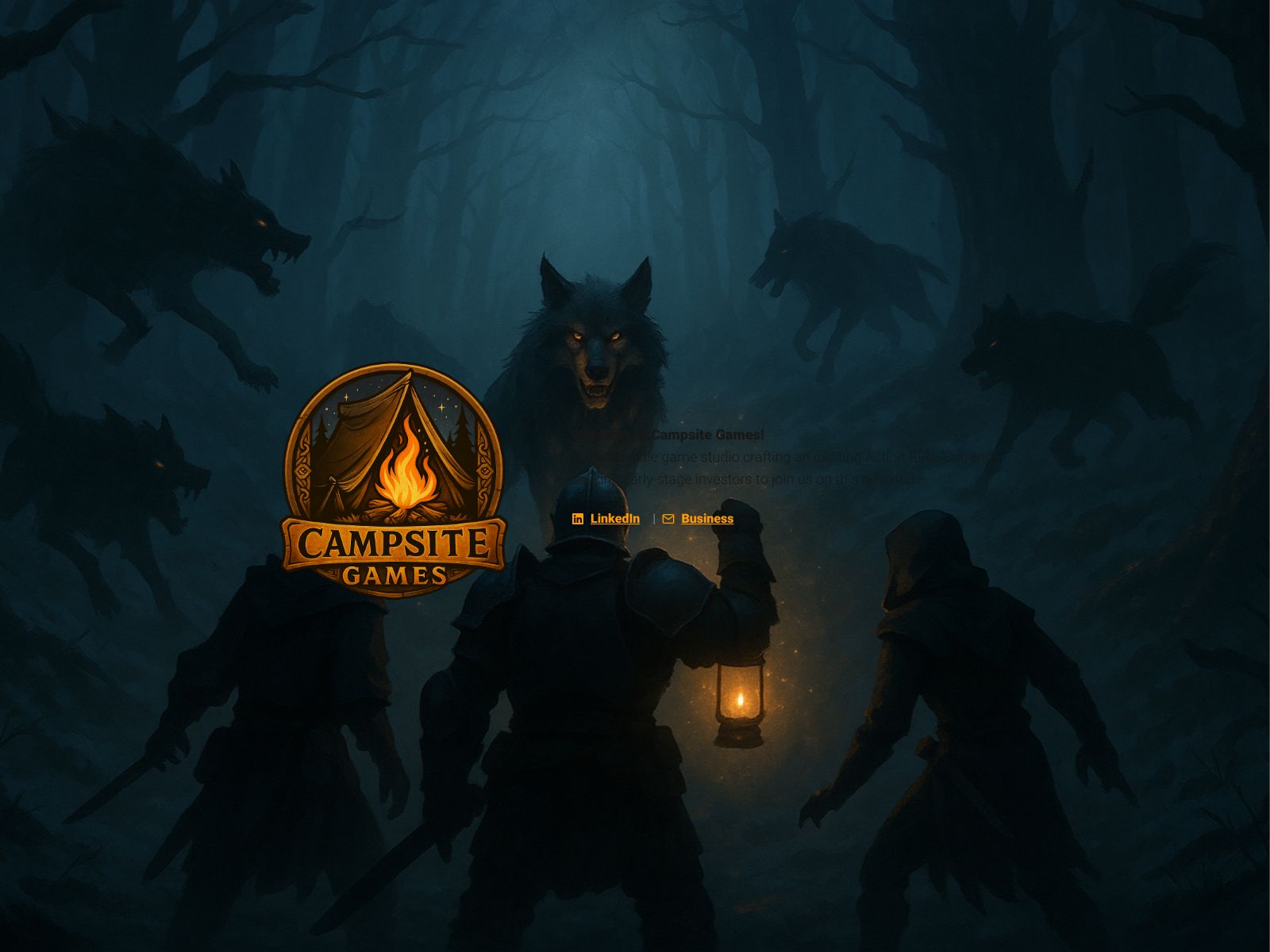
If you love games that bring people together, encourage teamwork, and leave you with stories to tell long after you log off, Campsite Games is a studio you’ll want to watch. Their focus is simple and exciting: build immersive, socially driven experiences where you and your friends shape the adventure together. Their current project is an Action Roleplaying Game (ARPG) set in an early industrial revolution era—where whirring machines meet enduring magic. It’s a world built for cooperation, exploration, and meaningful connections.
In this review and overview, I’ll walk you through what Campsite Games does, the features they’re focused on, how their philosophy might show up in their new ARPG, what kind of pricing models could fit, and which other studios and games they’ll likely be compared to. My goal is to help you figure out whether Campsite Games’ upcoming work fits what you and your group love to play—and what to watch for as more details emerge.
Campsite Games is a game development studio making immersive, social-first games. Their current project is a cooperative action RPG set in an early industrial revolution world where magic still exists.
Campsite Games is building around one big idea: games are more fun when they’re designed for people to play together. Based on the studio’s focus and the premise of their current ARPG, here’s what you can expect—and what that could look like in practice.
Many games add co-op as a side mode. Campsite Games treats social play as the main event. Their design philosophy emphasizes collaboration, relationships, and shared goals. For you, that likely means:
You can expect real-time combat and character progression, but with a social twist. In many ARPGs, progression is personal. Campsite Games puts shared objectives and group synergy at the center. Expect:
This setting is a big part of the studio’s appeal. It’s not medieval fantasy or modern sci-fi—it sits in a fascinating middle ground. Think early machines, smokestacks, coal and steam—and in the midst of all that, magic that hasn’t faded away. In a world like this, you can imagine:
It’s a rich canvas for storytelling and cooperative problem-solving. A setting like this also naturally supports discoveries, crafting, and role specialization in your team.
Many games say “play with friends,” but few systems actually reward long-term bonds. Campsite Games talks about meaningful relationships and shared goals as design pillars. That suggests features such as:
Exploration is one of the best ways to get players to collaborate naturally. Rather than chasing checklists, expect the focus to be on shared discovery:
When you and your friends feel like a “party” with purpose, a game sticks. Look for:
If the goal is social play, onboarding should be welcoming. The right UX can help new players feel useful from the first session. Expect:
Co-op and story often clash. But the studio’s emphasis on unforgettable stories suggests they’ll aim to make narrative moments work smoothly in groups. That could mean:
If you see yourself in any of these, keep an eye on Campsite Games:
As of now, the studio has shared its vision and setting focus. Some practical details aren’t specified in the information we have. Here are the key questions to track as updates arrive on their website:
The studio hasn’t shared pricing details in the information available here. Until official announcements are made, it helps to understand the common models used by social ARPGs, and what each means for you and your team:
For you and your friends, the best model is the one that respects time, avoids pay-to-win, and keeps social groups intact regardless of spending. Keep an eye on official channels for confirmation on pricing and monetization as development progresses.
“Competitors” here means games and studios that chase a similar promise: action RPG mechanics blended with social play, cooperation, and shared-world storytelling. If you’re excited by Campsite Games’ vision, these titles are worth knowing about—either as alternatives to play now or as comparators for what this studio might deliver.
A modern, polished ARPG with a shared world, seasonal updates, and drop-in co-op. Combat feels great, and the endgame offers a steady grind with group-friendly activities. Strong fit if you want fast-paced action and a clear live-service cadence.
Deep, complex ARPGs with extremely customizable builds and a strong endgame loop. While not “social-first,” they support party play and community-driven goals (leagues, trading, and theorycrafting). Ideal for groups who love mastering intricate systems.
Cooperative action RPG/shooter hybrid with fluid movement, fast combat, and social hubs. Long-running live-service support and a generous free-to-play approach. Great for squads that enjoy high-tempo missions and evolving systems.
Hunting action with tight co-op design. Hunts encourage communication, preparation, and role synergy without hard class locks. Perfect for teams that love mastering encounters, crafting gear, and celebrating hard-won victories together.
Shared-world shooter with strong RPG elements, raids, and cooperative endgame content. Excellent at creating social rituals—weekly milestones, seasonal events, and clan activities. A reliable pick for groups that thrive on coordinated challenges.
Co-op looter-shooter with aggressive, ability-driven combat and straightforward progression. Sessions are easy to drop into, making it accessible for friends with limited time. Good for groups looking for a self-contained campaign plus endgame expeditions.
Four-player co-op that nails teamwork, roles, and emergent objectives. While not an ARPG, it’s a masterclass in socially driven design—simple tools create complex teamwork, and every mission becomes a shared story. Great inspiration for social systems.
Open-ended, emergent co-op adventures on the high seas. Again, not strictly an ARPG, but it excels at social play, shared goals, and light role specialization. A reference point for how world systems can generate memorable group stories.
Action RPG with co-op, a vibrant world, and steady content drops. Co-op is lighter than a social-first title, but exploration and combat feel great with friends. Helpful comparator for pacing and world exploration.
Survival-tinged RPG with true co-op (including split-screen) and a focus on preparation and consequences. Slower and more deliberate than most ARPGs, but a strong example of how cooperation transforms the experience.
With so many popular co-op and ARPG options, where can Campsite Games carve its niche? Here are the standout opportunities based on their vision:
Social-first design isn’t easy. There are tradeoffs. These are the common pain points—and how a game like this might address them:
Imagine your party sets out from a smoky rail outpost at dusk. Your engineer supports the group with gadgets—tripods, lantern traps, and a zipline spool. Your mystic scouts ahead, reading arcane residue that hints at a hidden route through a collapsed foundry. Your duelist anchors combat with agile counters, while a tactician rotates supportive buffs that amplify clutch moments.
You work your way across scaffolding, using the engineer’s winch to bridge a broken conveyor, then combine the mystic’s ward with the duelist’s smoke to slip past a patrol. At the heart of the complex, a clockwork engine corrupted by magic lashes out. The team splits roles: one player interrupts the core’s cycle, another handles adds, and two coordinate interrupts and repositioning. It’s tense, but the moment you stabilize the engine and watch the city’s lights flicker back on feels triumphant—earned by teamwork, not just stats. Later, back at camp, a vendor recognizes your group’s feat. New dialogue opens, and a shared workshop upgrade becomes available for everyone in your party.
None of that is an official feature list—just a snapshot of how Campsite Games’ philosophy could feel in play. If that kind of session sounds fun, the studio’s direction is likely aligned with your tastes.
When you’re deciding whether to dive in with your friends, use this simple checklist:
Here are common questions players have about studios like Campsite Games and social-first ARPGs:
Most friend groups cycle through a few core co-op games each year. Campsite Games’ upcoming ARPG could slot in as your “team story” game—the one you play together for the collaboration, atmosphere, and shared milestones. It doesn’t have to replace your main looter or weekly raid night; it could be the adventure you pick up for focused sessions where teamwork and discovery take center stage.
If you’re curious, here’s how to prepare your group:
Campsite Games is aiming right at the heart of what makes cooperative games special: collaboration that matters, worlds that invite you to explore together, and systems that reward long-term friendships. Their current project—a social-first ARPG set in an early industrial revolution era where magic endures—has a compelling foundation. It blends a distinctive setting with a design philosophy that prioritizes player interaction and shared goals.
While details like pricing, platforms, and release timing haven’t been specified in the information we have here, the studio’s direction is clear and promising. If you and your team are looking for an experience built around teamwork, discovery, and memorable moments, keep Campsite Games on your radar. Follow their official site for updates, gather your friends, and get ready for adventures that you’ll still be talking about next week.
Here’s the bottom line: if you want a game that treats your group not just as a lobby, but as the very point of play, Campsite Games is building for you.
