




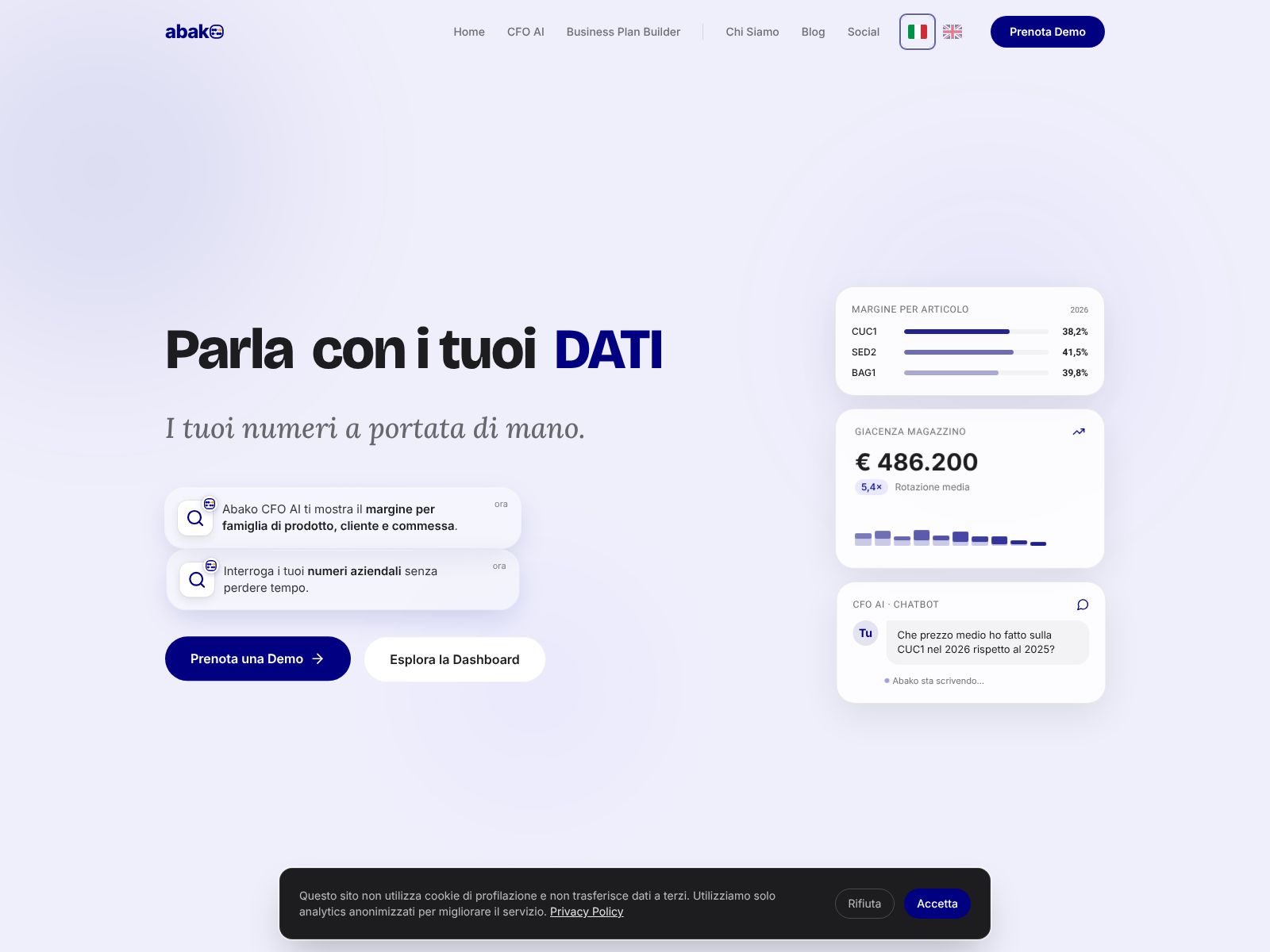
If you run a small or medium-sized business, you know the hardest part of finance isn’t data entry—it’s seeing the whole picture fast enough to act. Budgets live in spreadsheets, margins vary by product or customer, cash flow is tight, and inventory can tie up capital. Abako aims to pull these moving parts into one place and put them to work with AI. In this review, I’ll walk you through what Abako is, what it does well, where it may fall short, how it’s priced, and which alternatives are worth considering—so you can decide if it belongs in your finance stack.
Here’s the short version: Abako is an AI-powered financial management platform built for SMBs. It brings budgeting, margin analysis, cash flow monitoring, inventory tracking, and business planning together so you can plan, measure, and adjust faster. If spreadsheets are breaking under the weight of your model and you want a clearer view of profitability and cash, Abako is designed to simplify your day-to-day and your long-term plans.
Abako helps you plan your budget, monitor cash flow, analyze margins, track inventory, and build business plans in one place—using AI to highlight what matters and where to take action. In plain terms: it shows you where your money is going, what’s working, and what you can do next.
Spreadsheets are flexible, but they get messy as your team and data grow. Abako centralizes budgets so you can build, share, and update plans quickly. You can break budgets down by month, department, location, product line, or project, and then roll them up into a single view. AI helps by suggesting baselines from your historicals, surfacing seasonality, and flagging unusual variances so you’re not hunting through rows to understand what changed.
Knowing your top-line revenue is one thing. Understanding where you earn (or lose) profit is another. Abako’s margin analysis focuses on clarity: product-level, customer-level, or channel-level profitability. You can see contribution margins, pinpoint underpriced SKUs, and visualize where discounts, returns, or freight are eating into profit. The goal is simple—help you decide what to push, pause, or reprice.
Cash is the heartbeat of any SMB, and surprises are expensive. Abako gives you a live cash view with expected inflows and outflows, AR/AP timing, and projected runway. You can test what-if scenarios—like changing payment terms or pulling forward a purchase—to understand how your cash position shifts. AI helps surface upcoming pinch points and recommends actions to smooth working capital.
Inventory ties up cash and shapes your margins, but it’s often tracked separately from finance. Abako links inventory to both profitability and cash flow so you can see the full picture. You can monitor stock levels, turns, and carrying costs, and compare demand expectations against available inventory to avoid stockouts and overbuys. For product businesses, this connection is where better decisions (and better margins) often emerge.
Planning isn’t just one budget—it’s a set of alternative futures. Abako makes it easy to build scenarios like “Conservative,” “Base,” and “Stretch,” stress-test your assumptions, and see the impact on revenue, margin, and cash. You can run sensitivities on key drivers (price, volume, CAC, churn where relevant, staffing, wages, freight) to pressure-test your plan before you commit.
Good finance tools don’t just collect data—they communicate it. Abako offers dashboards for executives and managers with clear KPIs, trend charts, and variance highlights. You can share views with stakeholders and set alerts for key thresholds (e.g., gross margin dip, DSO drift, inventory excess, or cash below a target level), so you’re proactive instead of reactive.
Abako is built to sit alongside your existing systems. While specifics vary by customer, the platform’s aim is to connect to popular accounting software and banking data, ingest operational metrics (like sales and inventory), and keep models fresh with automatic updates. You can collaborate with your team, manage approvals, and control who sees what with role-based permissions.
Abako positions AI as an assistant that saves time and reduces blind spots. Practically, that means AI helps create budget baselines from historical data, flags anomalies in margins or spending, detects seasonality in demand and cash, and supports scenario-building with recommended assumptions. The goal isn’t to replace your judgment—it's to make your judgment faster and better informed.
Abako’s pricing varies by business needs and configuration. If pricing isn’t publicly listed for your plan, it’s best to request a quote and confirm the details in writing. When you speak with the team, here’s a simple checklist to keep the conversation focused:
If you’re migrating off spreadsheets or consolidating tools, ask about pilot pricing or a phased rollout to de-risk the transition.
Abako is built for small and midsize businesses that want to manage financial planning, profitability, cash, and inventory in one place without hiring a large FP&A team. It’s especially helpful if you:
Service firms can also benefit from budgeting, cash, and profitability views (e.g., by client or project), though the inventory focus is most valuable for e-commerce, retail, wholesale, and light manufacturing.
If you’re evaluating Abako, here are credible alternatives to consider, each with its own strengths. The right fit depends on your accounting system, the complexity of your model, team size, and whether inventory is central to your operations.
What it is: A cash flow forecasting tool that connects to common accounting systems and focuses on short-term cash planning. Best for teams that want a strong cash view without a full planning stack.
What it is: Management reporting and KPI dashboards with some forecasting features, commonly paired with accounting platforms for board reporting.
What it is: Reporting and forecasting for accountants and SMBs, with consolidated dashboards and budget vs. actuals.
What it is: Business planning and budgeting geared toward startups and small businesses, popular for building financial plans and investor-ready forecasts.
What it is: FP&A for SMBs and mid-market companies with driver-based forecasting, workforce planning, and dashboards.
What it is: A flexible modeling and dashboarding platform that replaces spreadsheet logic with a more structured, collaborative environment.
What it is: A modern FP&A platform aimed at high-growth and mid-market companies with integrations across finance and GTM systems.
What it is: Enterprise-grade planning platforms. Consider these if you need advanced consolidations, complex workflows, or global scale.
Make the decision with your data and your must-haves front and center. Here’s a simple framework you can use in a 30–60 minute internal session:
Whether you go with Abako or a competitor, a few habits will make any platform more valuable in week one:
Finance data is sensitive, so confirm the essentials: encryption in transit and at rest, access controls, SSO options, audit logs, and data retention policies. Ask about uptime SLAs, data refresh intervals, and support response times. For many SMBs, the difference between “good” and “great” isn’t just features—it’s how quickly you can get help when something looks off.
When you evaluate Abako, anchor on measurable wins. Common targets for SMBs adopting an integrated finance platform include:
You may not hit everything at once, but with clean data and clear ownership, these goals are realistic within a couple of quarters.
Think of Abako as a “finance cockpit” for SMB operators. If your top priorities are product-level margins, cash visibility, and inventory-aware planning, it’s likely to feel like a strong fit. If you mainly need board-ready visuals with light forecasting, reporting-focused tools may suffice. If you’re a mid-market company with complex consolidations and advanced workflows, an enterprise FP&A suite might be the better long-term path.
If Abako looks aligned with your needs, book a demo and bring a small dataset to test your real-world scenarios. To get the most out of the conversation, prepare:
Then ask the Abako team to model your base case and two scenarios live. You’ll learn quickly whether the platform mirrors how your business runs.
Abako is a modern, AI-powered financial management platform that brings budgeting, margin analysis, cash flow monitoring, inventory tracking, and business planning together for SMBs. Its strengths show up where many teams struggle: connecting profit to cash, tying inventory to both, and turning scattered spreadsheets into a clear, shared plan. It won’t remove the need for good data and discipline, but it can make both easier—and help your team make better decisions faster.
If you’re ready to get more control over profitability and cash without building a giant spreadsheet, Abako is worth a serious look. You can learn more or request a demo at abako.ai.
